
Search Beloit Warrant Records
Beloit Warrant Records usually run from the police side to the municipal court and then to Rock County. If you already know the name, a citation, or the year, you can narrow the case path fast. Beloit works well for a warrant search because the city and county both leave a usable paper trail, and the local court structure makes it easier to tell whether the record is still a city matter or has become a county file. That matters when you want a clear search path and not a pile of unrelated results.
Start a Beloit Warrant Records Search
The Beloit Police Department at 100 State Street, Beloit, WI 53511, is the first city office many people use when they need Beloit Warrant Records tied to a local incident. The department's phone number is (608) 364-6800, and the research says to contact the department directly when you need warrant information. It also says to check with the Rock County Sheriff's Office, which makes the county side part of the search from the very start. That is a useful split because the city can tell you what began locally, while the county can tell you whether the matter moved farther into court or enforcement.
The city search works best when you know the person's name, a rough date, or the type of incident that may have produced the warrant. A Beloit police contact can often tell you whether the issue is a police record, a citation matter, or a broader county case. That kind of early sorting matters because the same person may show up in multiple places, but only one office will have the record that matters for your purpose. If you start with the wrong office, the search can get slow fast.
Beloit also gives you a strong reason to keep the county sheriff in the loop. The research notes that Beloit Police work with Rock County Sheriff and that cases are filed in Rock County Circuit Court. That means a city search and a county search are not separate projects. They are two parts of the same trail, and the fastest path usually uses both.
Beloit Police Warrant Records
The Beloit Police Department page at beloitwi.gov/departments/police is the source shown in this image and the best city-side place to begin a Beloit Warrant Records search.
Use it when you want the police side of the record before you move to court or county.
The police office is the right place when the warrant grew out of a Beloit call, citation, or arrest report. It can help you figure out whether the matter belongs in a city file or whether you should move immediately to Rock County. That distinction is important because a police record often explains why the warrant exists, while the county record explains what happened after it was issued. If you only need to know the entry point, the police department is the better first call.
For people who want a simple starting point, the city police page is better than a broad web search. It puts you on the actual department site and keeps the search local. That is a better fit for Beloit Warrant Records than guessing from a third-party site that may not show the city case you need.
Beloit Municipal Court Warrant Records
The Beloit Municipal Court page at beloitwi.gov/departments/municipal-court is the source shown in this image and the right city court reference when a Beloit Warrant Records search turns on a citation or missed appearance.
Use it when the warrant likely came from a city court issue rather than a police report alone.
Municipal court matters are the city-side place to check when the issue is a traffic case, a citation, or another local matter that may have turned into a warrant after a missed date. If you already know the hearing date or citation number, the court side can tell you more quickly whether the case is still active, whether it moved to another office, or whether the next step is a payment or appearance. That is exactly the kind of information that helps a Beloit Warrant Records search stay focused.
The city court is also useful because it helps you separate a local court matter from a county criminal case. A person can have both at the same time. The municipal page helps you sort the city record from the county file before you start asking for copies.
Rock County Warrant Records for Beloit
When Beloit Warrant Records move beyond the city, Rock County becomes the next place to check. The Rock County Sheriff's Office is at 200 East US Highway 14, Janesville, WI 53545, and the phone number in the research is (608) 757-8000. The office is the county-side place to ask about warrant records, and the research says Beloit police work with the sheriff and that cases are filed in Rock County Circuit Court. That makes the sheriff the best county contact when you need active warrant verification or want to know whether the city matter has moved into county enforcement.
The Rock County WCCA portal at wcca.wicourts.gov is the source shown in this image and the quickest county court check for a Beloit Warrant Records search.
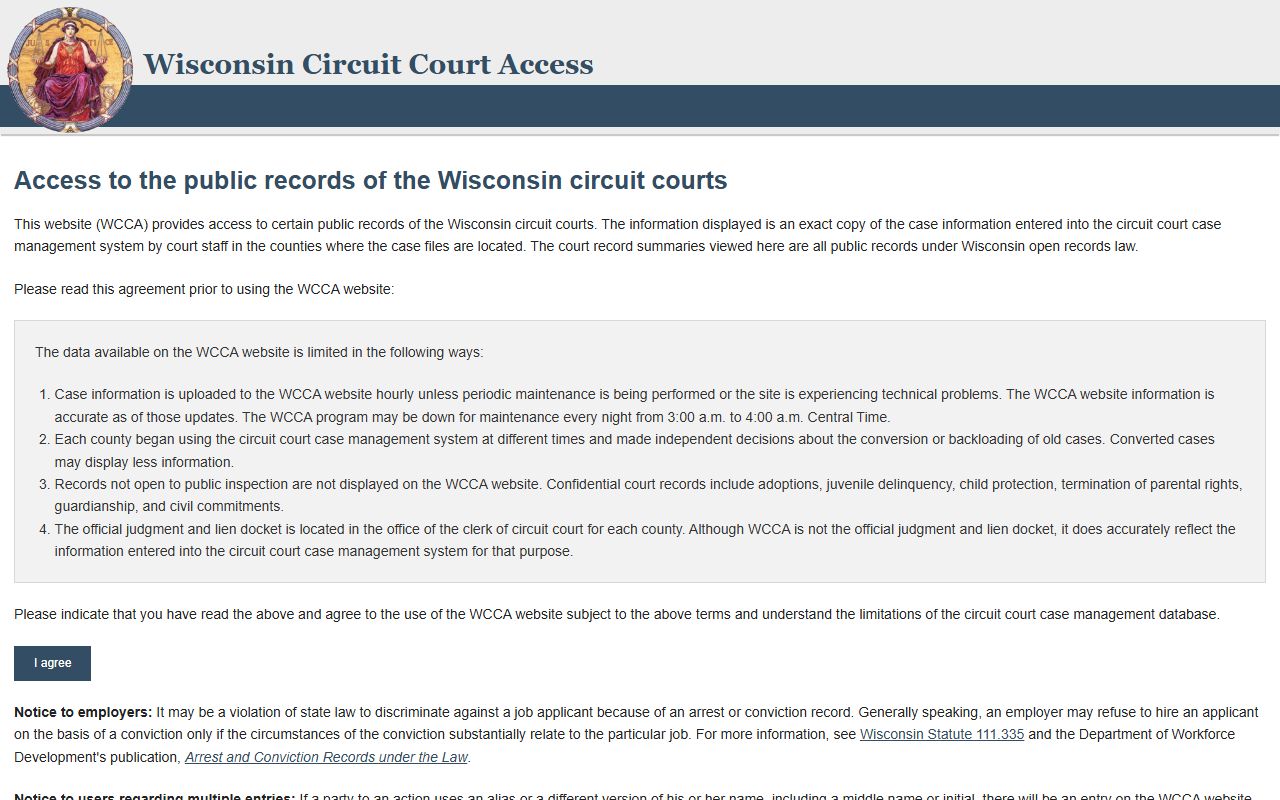
Use it to confirm the case before you call the sheriff or clerk for the file itself.
The Rock County Law Library page at wilawlibrary.gov/topics/county.php?c=Rock is the source shown in this image and a useful county guide when you want the search path in plain language.
That page helps if you want to understand the county process before you request a copy.
Beloit also has a local court-history example that shows why the county side matters. The research points to Griffin v. Wisconsin from 1987, a landmark Supreme Court case that originated in Beloit and dealt with a probationer home search without a warrant. That case matters here because it shows how a Beloit search issue can become a broader county or state question. Even when the city record starts the trail, the county side often gives the full picture.
Getting Copies of Beloit Warrant Records
Getting copies of Beloit Warrant Records usually means matching the request to the record source. If you need a police report, the police department is the better office. If you need a city court file, the municipal court is the better office. If you need a county docket or enforcement record, Rock County is the better office. That simple rule keeps the request from bouncing between desks that do not own the paper you want.
The sheriff is the best county contact when you want active warrant status or a custody follow-up. The court is the better contact when you need the docket, the hearing history, or a copy of the file that explains the warrant. In Beloit, those offices work together more than they overlap, so the quickest search is the one that starts with the source of the record and not just the city name on the envelope.
If you only need to confirm whether a file exists, WCCA and the city pages are usually enough to tell you where to go next. If you need something you can hand to another office, the county file or municipal file is usually the better copy to request. That is the difference between a quick check and a document you can actually use.
Wisconsin Rules for Warrant Records
Beloit Warrant Records follow the same statewide framework as the rest of Wisconsin. Wis. Stat. Chapter 968 covers criminal proceedings and warrants, while Chapter 19 covers public records access. Those chapters explain why a warrant may be available for public review but still show redactions, limits, or a different level of detail depending on whether you are looking at police, court, or county records.
The Wisconsin court system at wicourts.gov and the circuit eFiling page at wicourts.gov/ecourts/efilecircuit/index.jsp are useful when a Beloit case moves into circuit court. They are not a replacement for the city or county office, but they help you place the record in the right court before you ask for copies. That is especially useful if the same person appears in more than one case type.
The Wisconsin State Law Library arrest page at wilawlibrary.gov/topics/justice/crimlaw/arrest.php and the search page at wilawlibrary.gov/topics/justice/crimlaw/search.php help explain the legal side of the search. They are good background when you want to understand how a police contact, a court step, and a warrant all fit together. For Beloit searches, that background helps you decide which office has the real record and which office only points toward it.