
Search Wisconsin Warrant Records
Wisconsin Warrant Records are easiest to search when you start with the statewide court index, then move to the county or city office that controls the live file. A public docket can show that a case exists, but it may not answer whether a warrant is still active, recalled, served, or tied to a later hearing. That is why the best Wisconsin search uses WCCA for the first pass, then checks the sheriff, clerk of court, municipal court, or law library resource that matches the place and case type involved.
Wisconsin Warrant Records Overview
Where Wisconsin Warrant Records Start
Most Wisconsin Warrant Records searches start in one of three places. The first is the statewide court system, which helps you connect a name to a county, case number, and docket trail. The second is the county sheriff or city police agency that handles current enforcement questions. The third is the clerk of circuit court or municipal court that holds the filing history behind the public entry. Good search work means knowing which of those offices answers the question you actually have. A status question belongs with law enforcement. A copy question belongs with the court file. A broad name search usually starts online.
The statewide court portal in the next image comes from WCCA Main Portal and remains the main public index for Wisconsin Warrant Records in most counties.
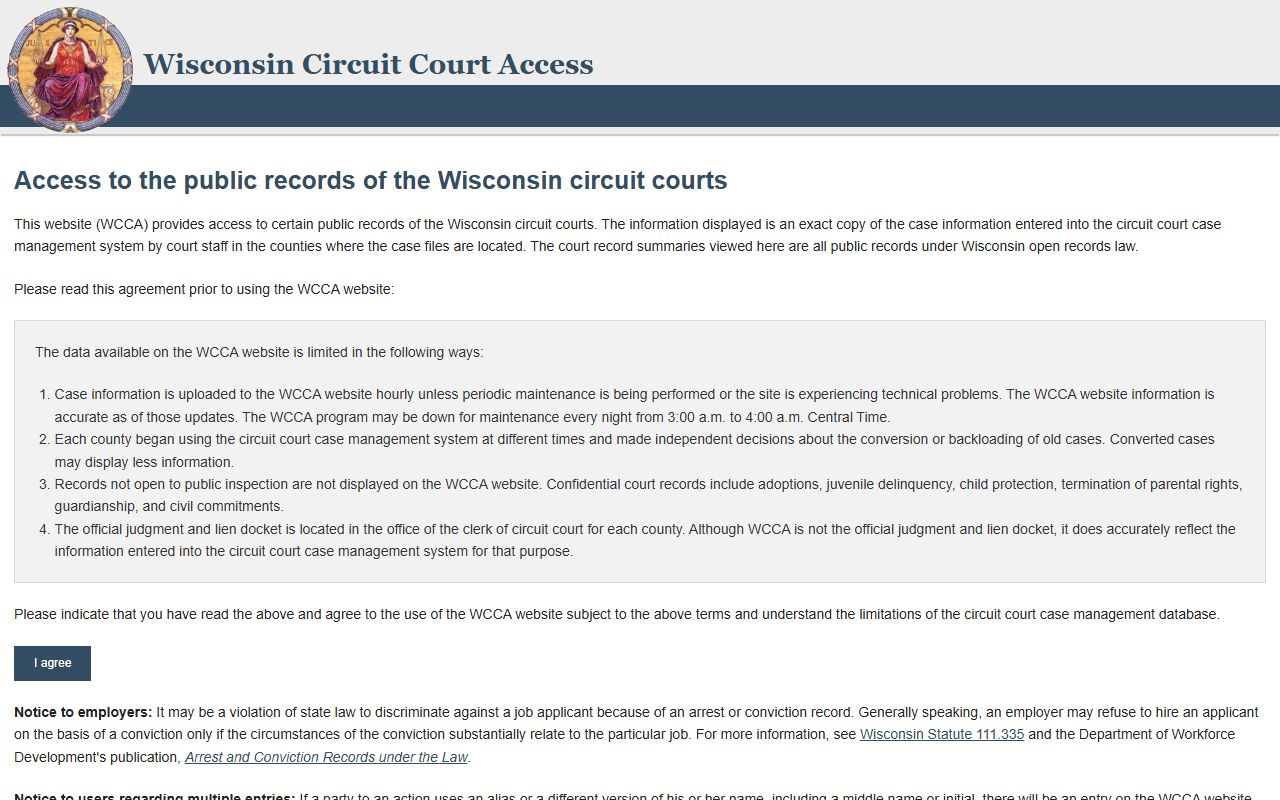
That portal gives you the first layer of public information, including party names, case numbers, and docket clues. It does not replace a direct county confirmation, but it keeps the search tied to a real case instead of a broad web result.
The Wisconsin court system image below comes from Wisconsin Court System, which is the broader court hub for forms, contacts, calendars, and support around Wisconsin Warrant Records.
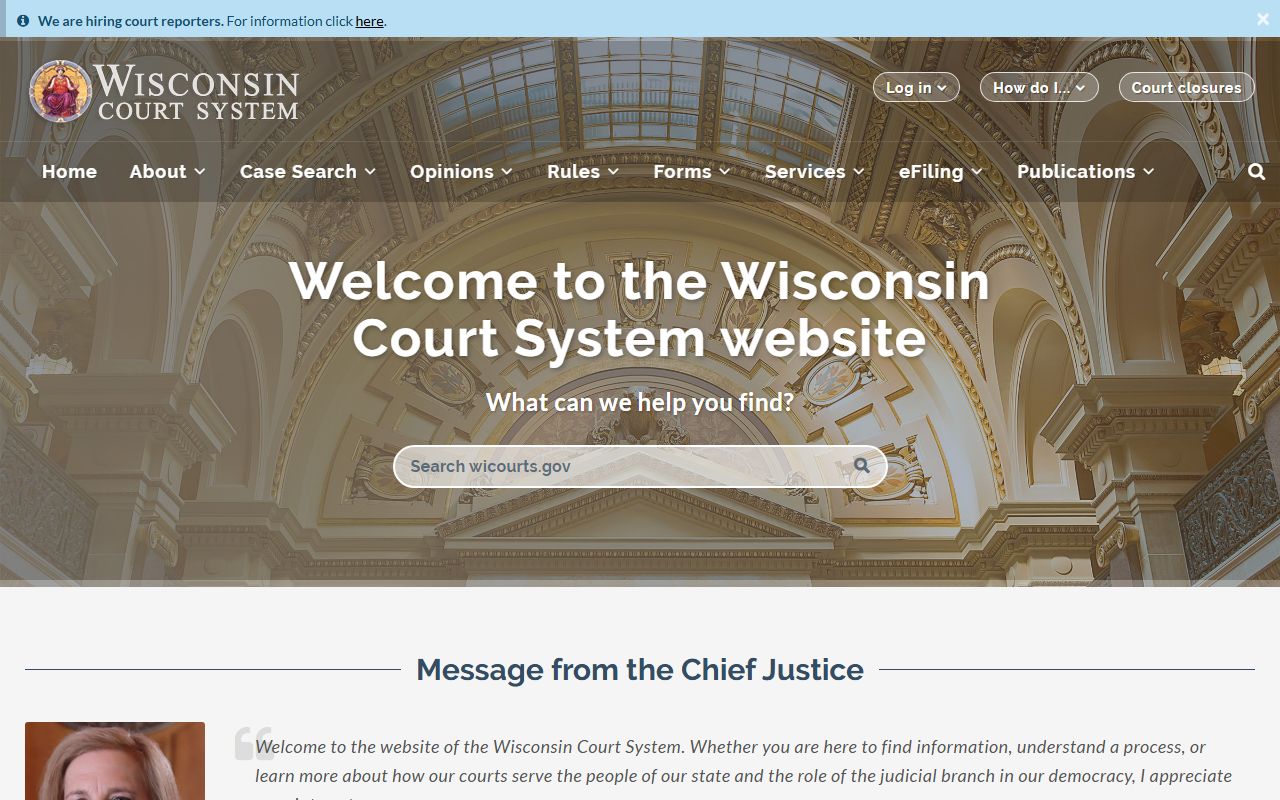
Use the main court system when your search turns into a forms question, a filing question, or a county contact problem. It provides the court framework that sits behind the public index.
The committee page shown next comes from WCCA Committee and helps explain the statewide public-access structure that supports Wisconsin Warrant Records.
That page matters because it reinforces a simple point: WCCA is a court access tool, not a one-stop answer for every active warrant question. The county office still matters.
How to Search Wisconsin Warrant Records
A strong Wisconsin Warrant Records search starts with the cleanest identifier you have. If you know the case number, use that first. If you only know a name, add a county, a city, or an approximate year. The more exact the starting point, the less likely you are to confuse one person with another or one county with the next. Once you have a likely match, shift from the broad portal to the office that owns the current answer.
Use this order for a practical statewide search:
- Search WCCA by full name or case number
- Match the record to the right county or city
- Check the sheriff or police agency for live status
- Use the clerk or court for copies and docket detail
- Use the law library when procedure needs context
The eFiling image below comes from Circuit Court eFiling. It matters because many Wisconsin Warrant Records searches eventually turn into a filing, motion, or docket-following question rather than a simple lookup.
That resource helps when you need to understand how documents move through the circuit courts. It is not a warrant database, but it supports the court side of the same search path.
The search-and-seizure resource shown next comes from Law Library Search and Seizure Resources. It is useful when a searcher needs a better explanation of warrant procedure, evidence issues, and limits on what a public search will show.
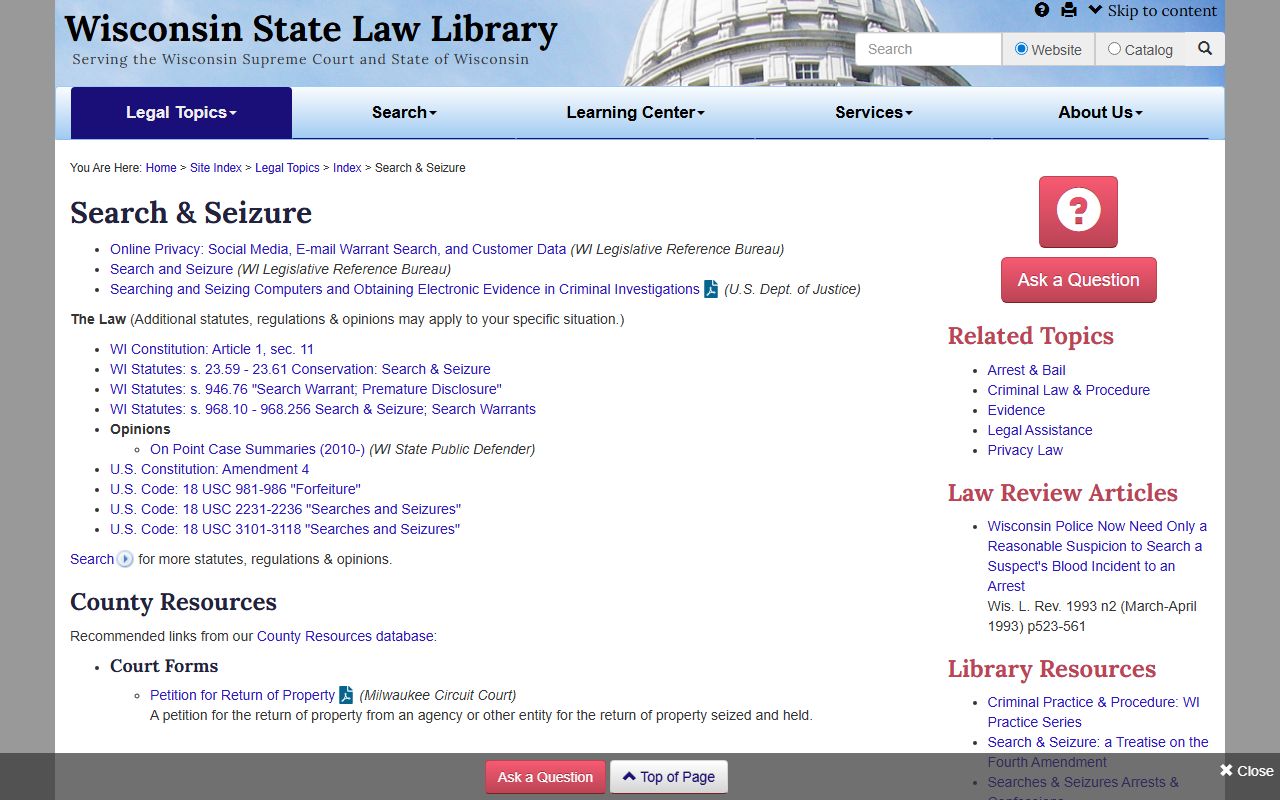
That page is especially useful when you are reading docket language about search warrants, seized property, or related procedure for the first time. It turns a basic lookup into a more informed search.
Wisconsin Warrant Records and Record Types
Wisconsin Warrant Records can point to several different legal tracks. A search may involve an arrest warrant issued on probable cause, a bench warrant issued after a failure to appear, a search warrant tied to evidence collection, or a warrant-related note inside a broader criminal or municipal case. The public searcher does not always need to know every procedural difference at the start, but it helps to know that one label does not cover every kind of record.
The arrest-and-bail research page shown below comes from Law Library Arrest Resources and gives statewide context for the warrant side of Wisconsin records work.
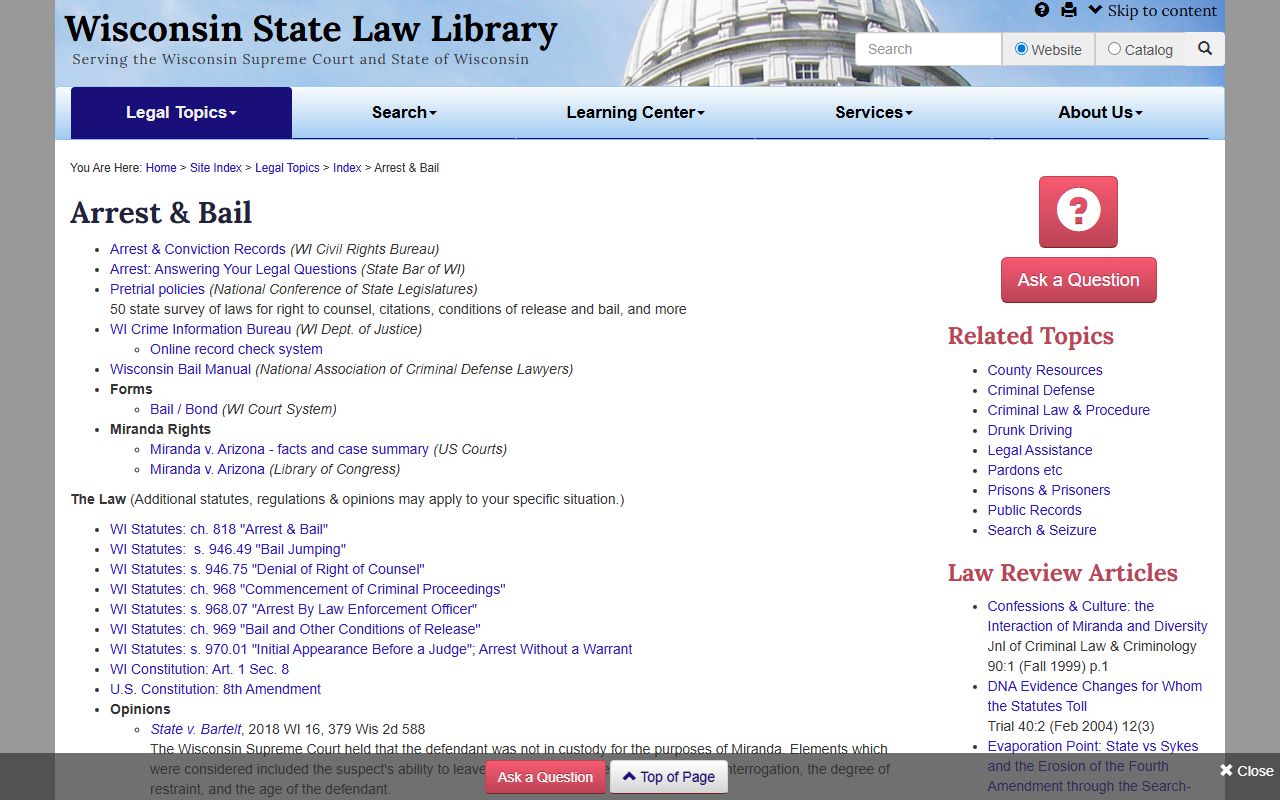
That page helps explain how arrest, bail, and court appearance rules connect to the records you see in WCCA or at the courthouse. It is useful when the search needs legal context, not just a name match.
The criminal proceedings image below comes from Chapter 968, which covers complaints, warrants, failures to appear, and search warrant procedures in Wisconsin.
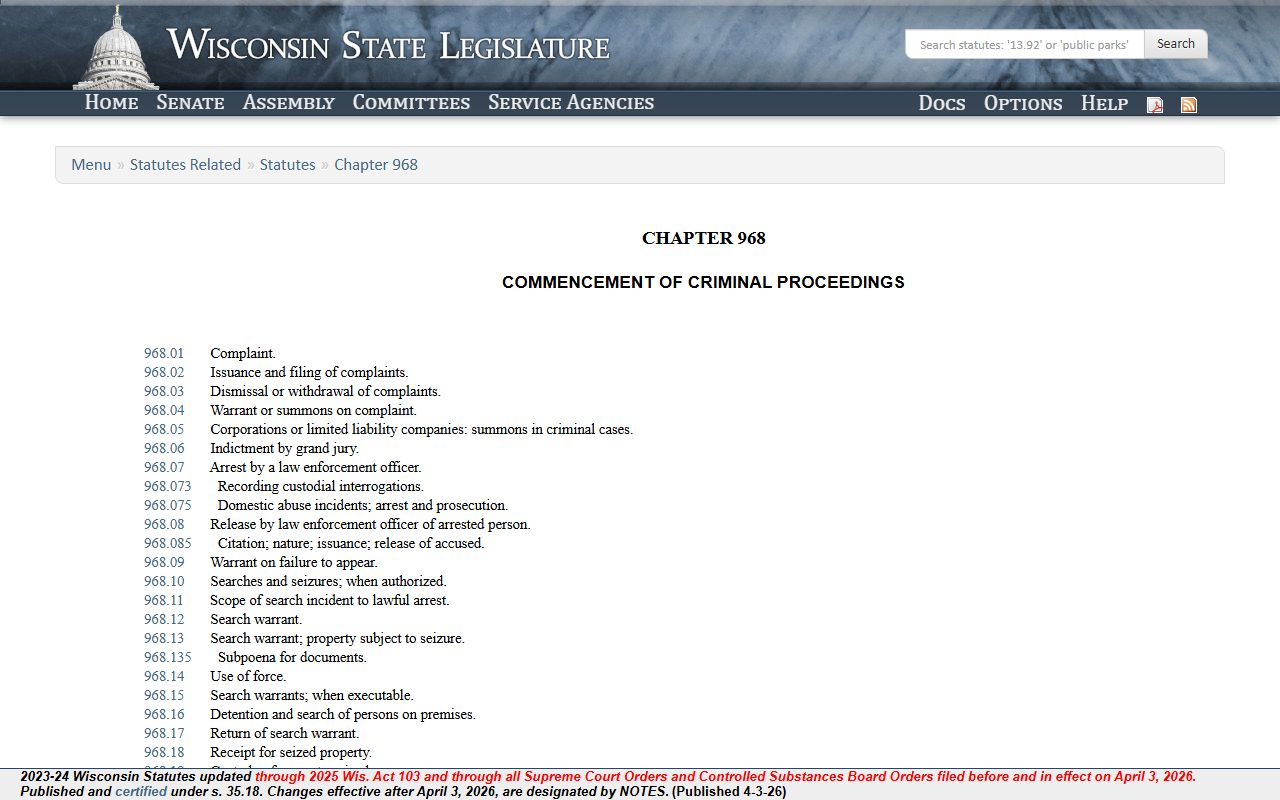
That chapter matters because it explains why a warrant may issue, how a complaint relates to the case, and why a docket line may point to a missed hearing or a later service event.
The general crimes image shown next comes from Chapter 939, which defines classification terms that often appear around Wisconsin Warrant Records.
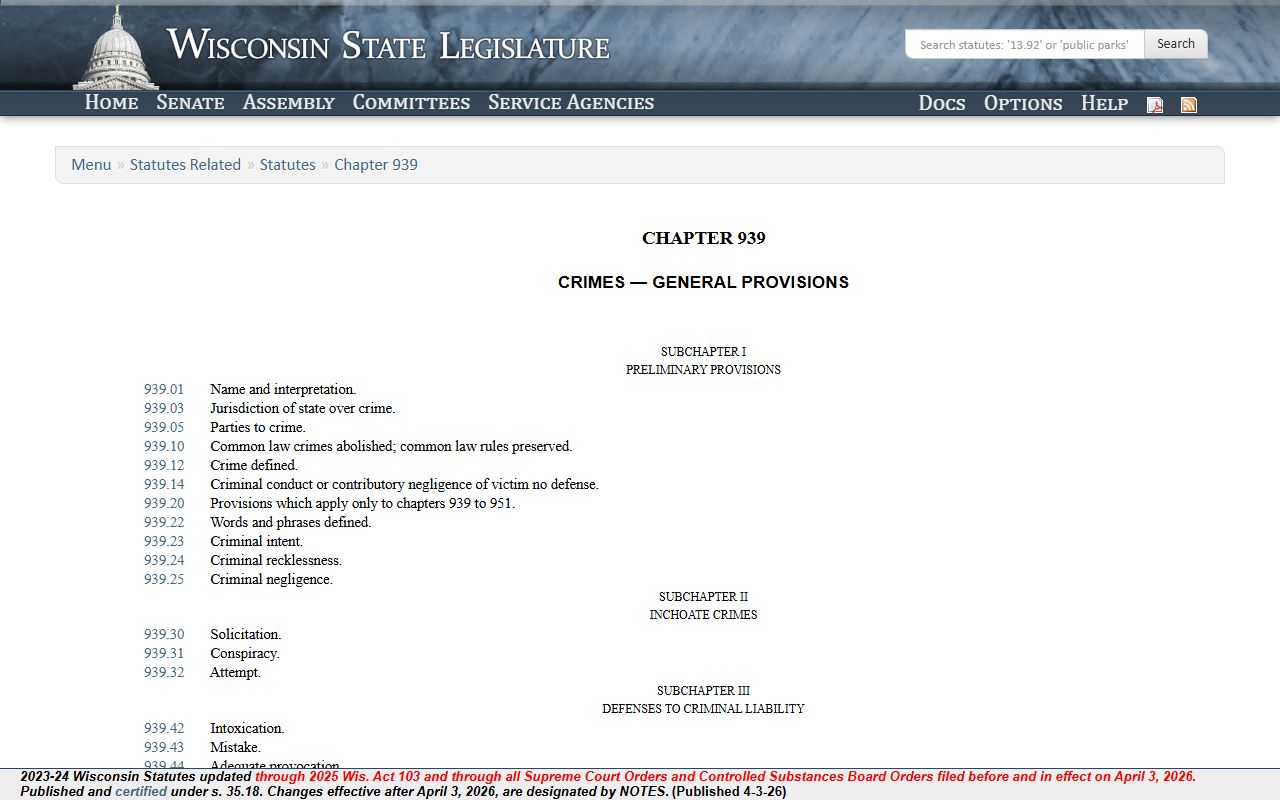
Those classification rules help when you are trying to understand whether the record sits inside a felony case, a misdemeanor case, or another offense category. They do not answer the whole search, but they clarify the file.
Wisconsin Warrant Records and Public Access Rules
Public access shapes almost every Wisconsin Warrant Records search. Court records are generally open unless a statute, court order, or confidentiality rule says otherwise. That does not mean every warrant detail appears online the same way or at the same time. A search warrant may stay limited until execution. A juvenile matter may stay closed. A fresh filing may not appear in the public index right away. Good search work means reading those limits as part of the record, not as a sign that the record does not exist.
The public records image shown below comes from Chapter 19, which is Wisconsin’s public records law and one of the key legal frames behind Wisconsin Warrant Records access.
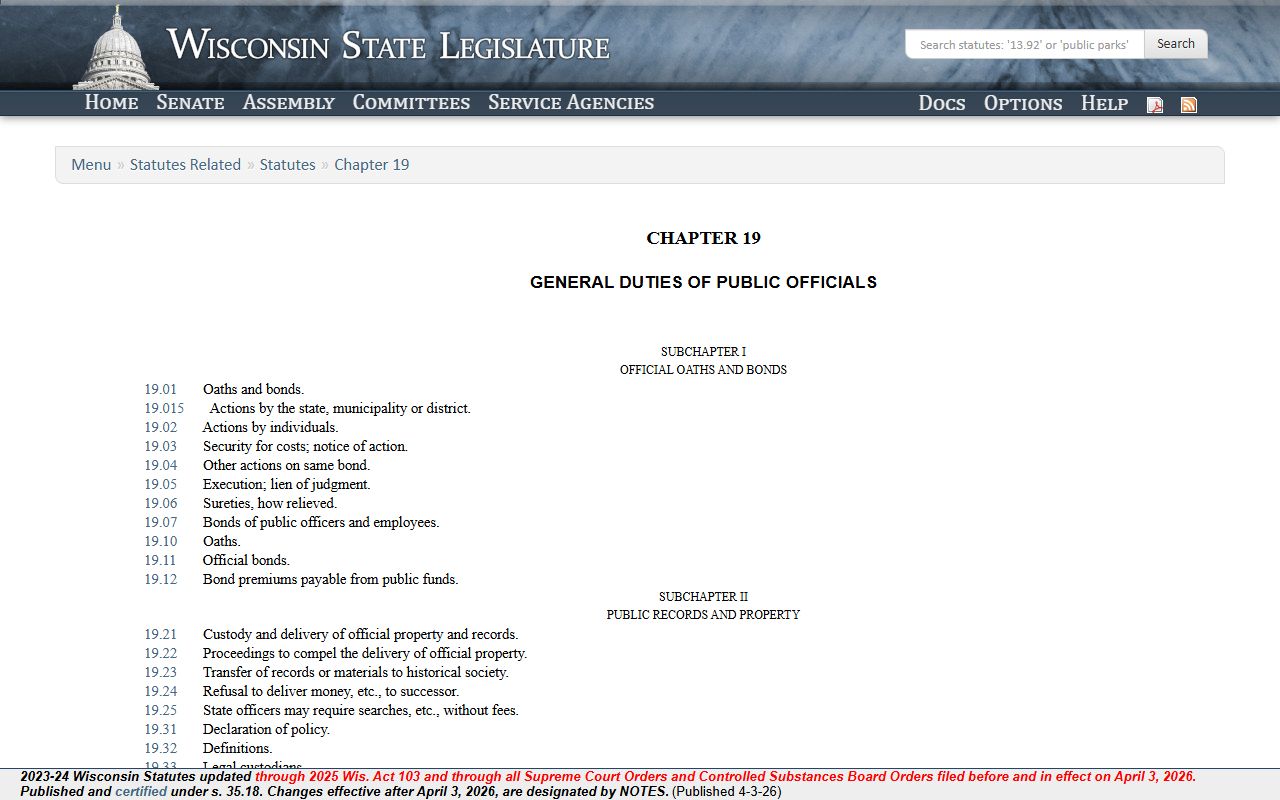
That chapter matters because it explains why public inspection exists, how access requests are handled, and why some records are available for viewing even when not every detail is reproduced in a portal.
The bail-and-release image below comes from Chapter 969, which helps explain how warrants, release conditions, and later court steps can interact in Wisconsin records.
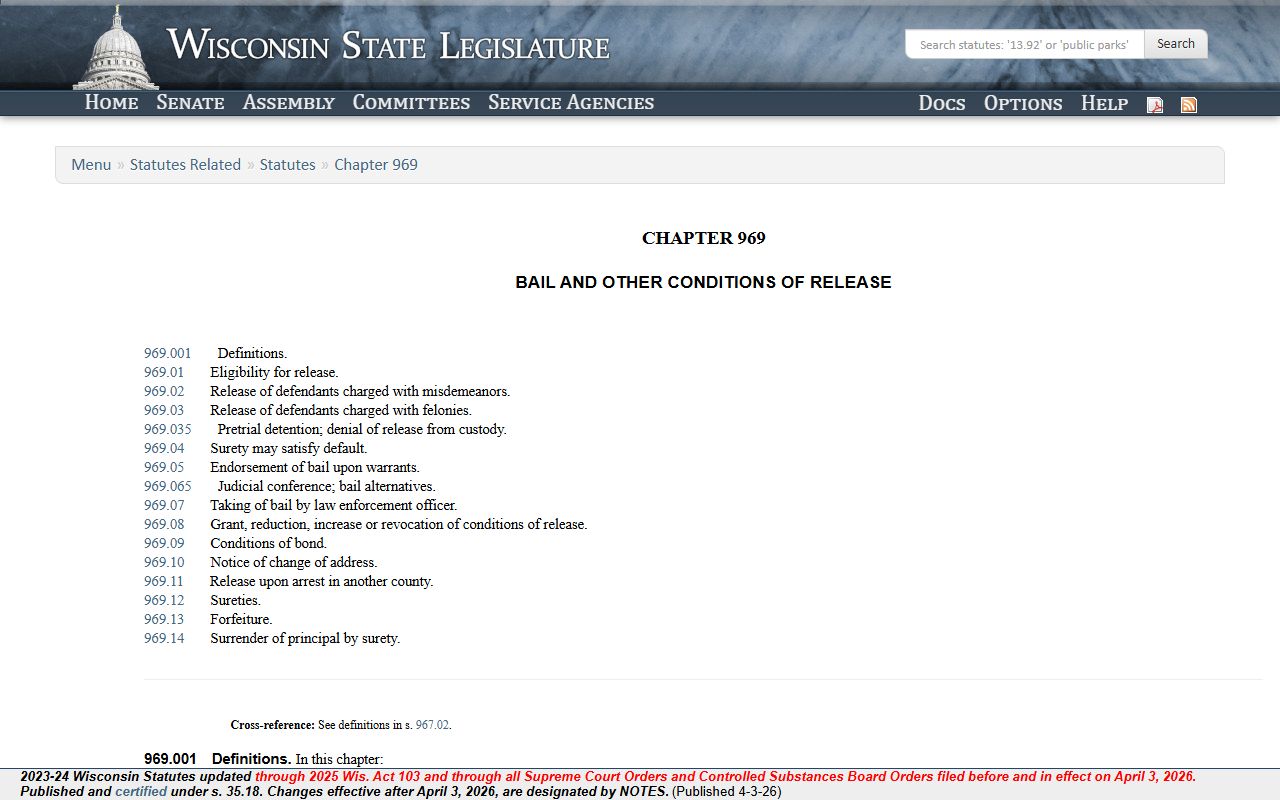
That part of the law matters when a record search turns into a question about conditions of release, endorsed bail, or why a warrant note sits beside later custody or bond entries.
The government-crimes image shown next comes from Chapter 946, which includes offenses such as bail jumping that often appear in Wisconsin Warrant Records narratives.
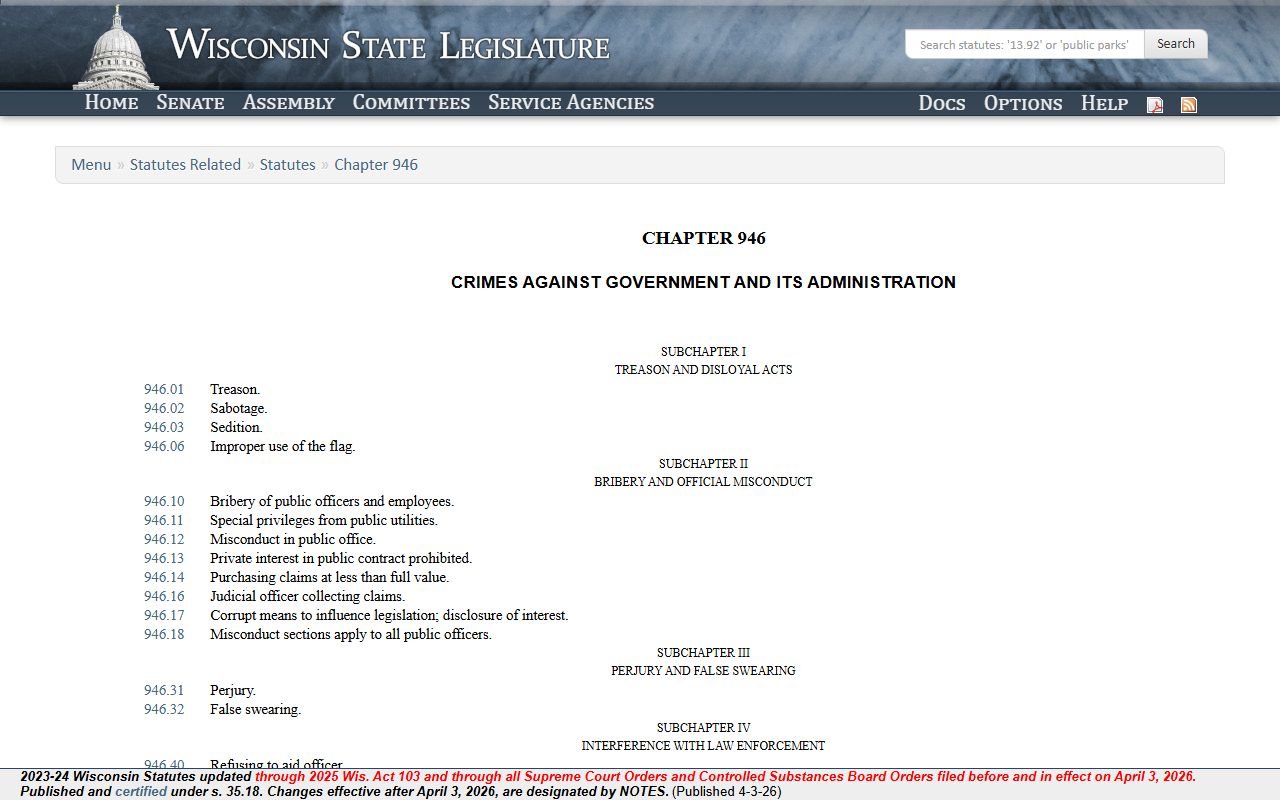
That chapter helps explain why a missed appearance or failure to comply can create a new layer in the record instead of just closing the old one. The warrant trail often sits inside a larger pattern of court action.
Getting Wisconsin Warrant Records Copies
If you need more than a search result, Wisconsin Warrant Records usually move from the online portal to the court file or the records office. The clerk of circuit court is the usual stop for docket printouts, copy requests, and file inspection in circuit court matters. Municipal courts fill the same role for city ordinance cases. Sheriffs and police agencies handle separate records questions when the search involves booking, current custody, or the present status of an arrest warrant. That division matters because the same case may produce more than one record trail.
The Department of Justice image below comes from WI Department of Justice, which is part of the statewide agency picture around public safety, criminal history systems, and record access.
That resource does not replace a county court file, but it helps explain the agency side of Wisconsin records work and where statewide criminal information systems fit into the larger picture.
The Department of Corrections image shown next comes from Department of Corrections, which becomes useful when Wisconsin Warrant Records connect to incarceration, release, supervision, or custody status questions.

That is especially helpful when the search has already moved beyond the court note and into current incarceration or community supervision questions. It gives the search another reliable statewide checkpoint.
The law-enforcement network image below comes from WI Law Enforcement Network, which reflects the broader Wisconsin law-enforcement structure around information sharing and access limits.
That statewide context matters because not every warrant-related detail that exists inside law enforcement systems is reproduced in public-facing search tools. Public access and enforcement access are not the same thing.
Wisconsin Warrant Records and Legal Context
Some Wisconsin Warrant Records searches stay simple. Others turn into legal-context questions about what a docket line means, why a search warrant stays limited until service, or how a county record fits into state criminal procedure. When that happens, the best move is not to jump to a low-quality third-party site. It is to stay inside the Wisconsin court system, the Wisconsin Legislature materials, and the State Law Library resources that explain the records in plain language.
The Department of Justice statutes image shown below comes from Chapter 165, which covers the Department of Justice and its crime-information functions inside Wisconsin.
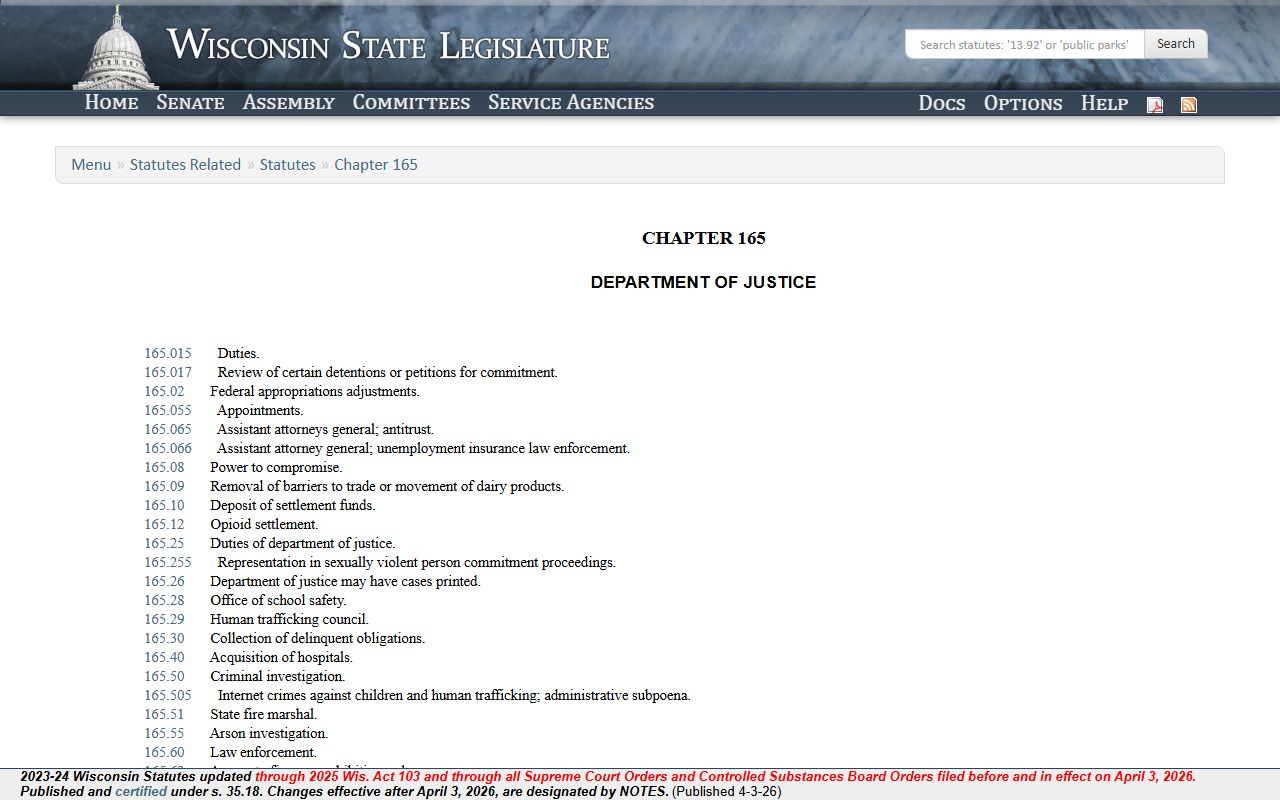
That chapter matters because it shows how statewide information functions and criminal-record infrastructure sit beside the county and court systems used in daily public searches.
The state law library still matters here because it keeps Wisconsin Warrant Records research anchored in official guidance instead of thin summaries. When a county page points you back to statewide law, the law library often gives the clearest next explanation.
Are Wisconsin Warrant Records Public
Many Wisconsin Warrant Records are public in some form, but public does not always mean complete, immediate, or identical across every system. Court dockets, case identifiers, and broad status information often appear through WCCA or through a local court office. Some enforcement details remain with the sheriff or police agency. Some search warrant material stays limited until execution. Some juvenile matters remain closed. The real skill in a public search is understanding which part of the record is open, which office controls it, and what the public portal is actually showing at that moment.
That is why this site is organized by county and city instead of one flat statewide page. Wisconsin Warrant Records are local in practice even when the search starts statewide. A Milwaukee search does not work exactly like a Vernon County search. A Sheboygan municipal matter does not work exactly like a Winnebago County circuit case. The state tools create the map, but local offices finish the route. Use the county and city pages below when your statewide search needs a real local next step.
Browse Wisconsin Warrant Records by County
Each Wisconsin county page focuses on the local sheriff, clerk of circuit court, WCCA path, and law library resources that matter for Warrant Records searches in that county.
Wisconsin Warrant Records in Major Cities
City pages help sort out police, municipal court, and county court overlap for Wisconsin Warrant Records searches in the state’s largest local jurisdictions.