
Milwaukee Warrant Records Lookup
Milwaukee Warrant Records can be split across the police records office, the municipal court, and the Milwaukee County sheriff and clerk systems, so the fastest search usually starts with the type of record you want. If you need a police report tied to an arrest, a municipal warrant tied to a citation, or county court information that is not showing the way you expect in statewide search tools, Milwaukee has separate offices that each hold part of the picture. That matters because Milwaukee County does not always mirror the same WCCA coverage used elsewhere in Wisconsin. The result is a city where good records searches depend on knowing which office handles the specific record you need.
Where to Start for Warrant Records in Milwaukee
The main statewide tool is WCCA, which is the best first stop for many Wisconsin case searches. In Milwaukee, though, it helps to treat WCCA as a starting point instead of the only answer. Some Milwaukee County records are handled separately from the normal WCCA coverage used elsewhere in Wisconsin, and that means you may need to cross-check the municipal court, the sheriff, or the county clerk before you assume a record is missing.
Milwaukee also has a strong records structure at the city level. Police-side requests go through the Milwaukee Police Department open records office, while court-side questions go through the municipal court at 951 N. James Lovell Street. County-level warrant enforcement and inmate lookup services are handled through the sheriff's office and the county jail systems. If you know whether your search is police, municipal, or circuit related, you can move much faster and avoid asking the wrong office to interpret a record it does not own.
The practical approach is to start broad, then narrow by agency. A search for a bench warrant in a city ordinance matter belongs in municipal court. A police report, citation copy, or accident report belongs with MPD open records. A county-level warrant or custody issue belongs with the sheriff or the county clerk. That division is the main reason Milwaukee warrant searches are more office-specific than many other Wisconsin cities.
Milwaukee Police Warrant Records and Open Records
The Milwaukee Police Department open records office at mkepolice.com/reports is the best match when a warrant record is tied to a police report, an accident report, or another MPD file. The office is at 2333 N. 49th Street, 2nd Floor, Milwaukee, WI 53210, and the request line is (414) 935-7502. You can also email mpdopenrecords@milwaukee.gov when you need to ask about a request or confirm the right format for delivery.
The office handles simple requests at the counter, including accident reports, citations, standard operating procedures, and non-sensitive incident reports. More time-intensive requests, such as violent incidents, body camera video, audio records, personnel files, or Internal Affairs records, get a separate review. That distinction matters if you are trying to connect a warrant to the incident that came before it. The department also notes that reportable traffic accidents are typically available within about 14 days, while more complex files can take longer.
The fees are straightforward but worth checking before you go. MPD lists $0.25 per black-and-white page or CD, $0.50 per color photo, and a $10 fee for traffic accident reports. The office also states that in-person counter service is available Tuesdays and Thursdays from 9:00 a.m. to 3:00 p.m. and that cash or check is required. If your warrant search needs supporting police records, that is the office that can usually explain whether the report exists, whether it is simple enough for counter service, and what the copy cost will be.
The open records process is especially useful when you need a record trail that sits behind a warrant rather than the warrant entry itself. A citation, a complaint, or an accident report can show why a court action started. That makes the MPD records office a practical first stop for users who need the story around Milwaukee Warrant Records rather than only the court docket.
The Milwaukee Police Department open records page at mkepolice.com/reports is the city-side entry point that matches this records image.
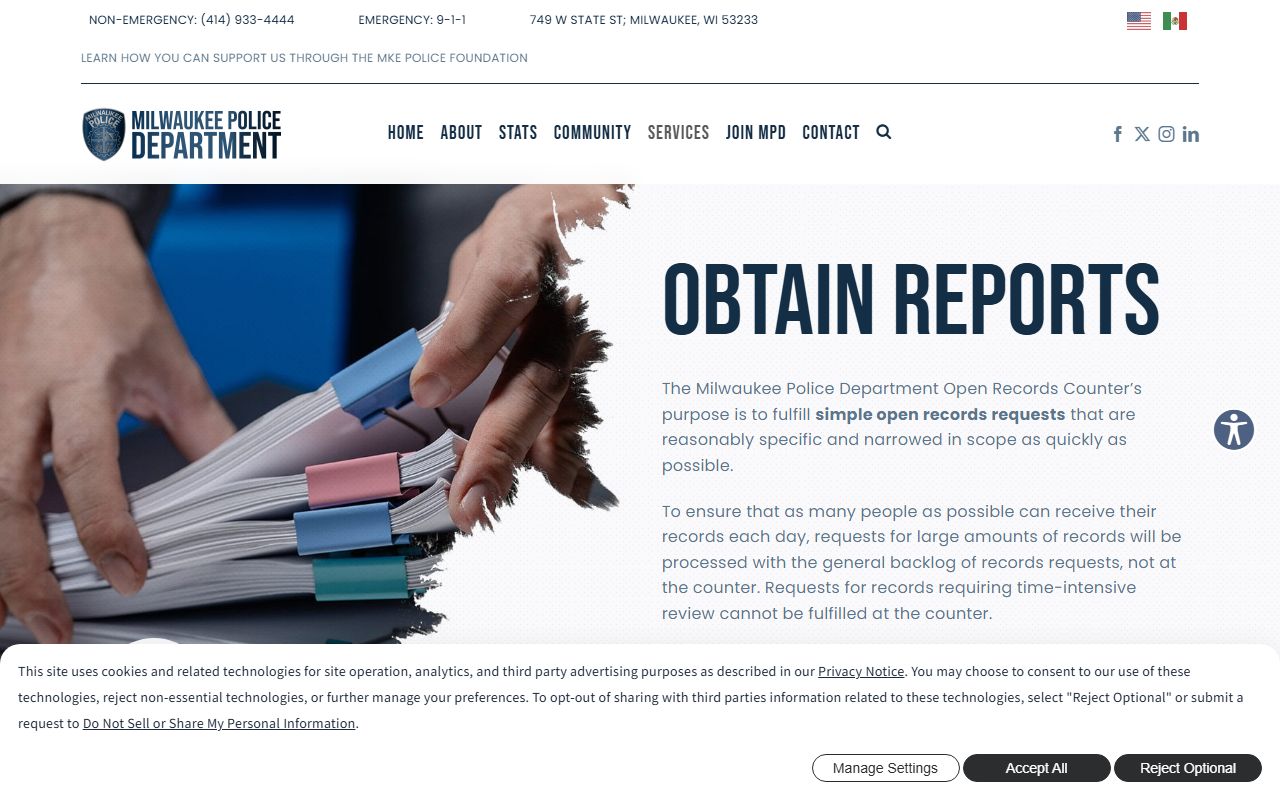
Use this office when you need the police report, citation copy, or related incident paperwork that helps you verify how a Milwaukee warrant record was created.
Milwaukee Municipal Court Warrant Records
Milwaukee Municipal Court at municipalcourt.milwaukee.gov is the main place to look when the warrant is tied to a city ordinance case, traffic matter, or failure to appear in municipal court. The courthouse is at 951 N. James Lovell Street, Milwaukee, WI 53233, and the general phone number is (414) 286-3800. The court's online case search is useful when you already have a citation number, a case number, or a party name and want to see whether the matter is active, resolved, or waiting on a payment or hearing step.
Municipal warrant activity in Milwaukee is usually tied to court appearances and citation enforcement. The research notes regular, bench, and arrest-related warrant handling in the municipal court system, and it also points to the court's payment and warrant-lifting procedures. That means a person who is trying to clear a local warrant often needs to do more than simply read the docket. The court may require payment, a new appearance, or another action before the warrant is lifted. The city court also offers online payment options, payment plans for some cases, interpreter services, and ADA accommodations, which can matter when the issue is a missed court date rather than a new criminal charge.
If you are searching by citation, the municipal portal is usually faster than trying to reconstruct the case from another office. The portal lets you search by citation number, name, or case number, and it gives you the local municipal record that may not show up in the same format on county or police systems. For city warrant research, that direct case search is often the cleanest way to confirm whether a warrant was issued and whether the court has already recorded a payment, hearing, or other step toward lifting it.
The municipal court also matters because it is the place where a local warrant can be resolved instead of merely confirmed. If the case is active, the court can tell you what the next step should be. If the case is old, the court can usually tell you whether the file is still open or whether you need to shift to the county clerk for older records. In Milwaukee Warrant Records work, the municipal court is where the search becomes an action plan.
Milwaukee County Warrant Records and Circuit Court Access
County-level Milwaukee Warrant Records are where the search gets more complicated. Milwaukee County records are handled separately from the normal WCCA coverage used in much of Wisconsin, so the county clerk and sheriff offices remain important even if you already checked the statewide portal. The county clerk of circuit court references include the criminal division at 821 W. State Street and the civil records center at 901 N. 9th Street, which is a reminder that Milwaukee records are spread across courthouse locations rather than concentrated in one simple database.
The county clerk is the right office when you need a court file, a certified copy, or a docket review that goes beyond a basic online lookup. The research notes that Milwaukee County records are not on WCCA/CCAP in the same way as many other counties, so a direct clerk request is often the more reliable route. Copy fees are listed at $1.25 per page, with an added $5 for certified copies, and there is also a $5 search fee when the case number is unknown. If your goal is to get the actual file behind a warrant or see how the court recorded the matter, that office is the place to ask.
The sheriff's office at county.milwaukee.gov/EN/Sheriff is the other major county source. The public records and warrant squad are associated with 821 W. State Street, Room 107, Milwaukee, WI 53233, and the office can be reached through the records and warrant contact numbers listed in the research. Milwaukee County does not maintain a public online warrant database, so the sheriff is best used for warrant checks by phone or in person and for inmate-related information rather than a single online search page.
The Milwaukee County inmate locator is shown below because it is one of the quickest ways to confirm custody status and see whether a warrant-related arrest has already turned into a jail record. That matters in Milwaukee because a warrant search and a custody search often answer different questions.
The Milwaukee County inmate search at inmatesearch.mkesheriff.org is the online custody lookup tied to this record path.
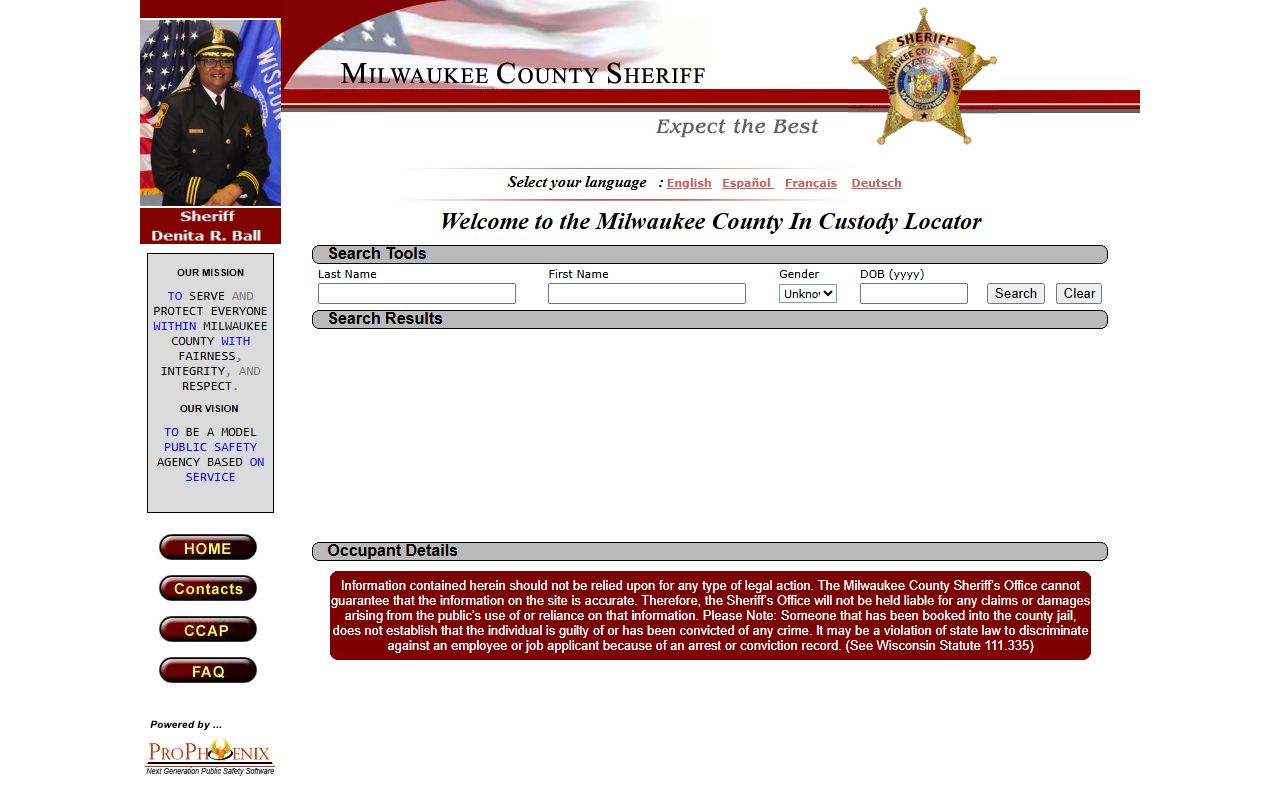
If you need custody status, bond information, or the current jail record connected to a Milwaukee Warrant Records inquiry, this locator is a better fit than a broad public search.
The Milwaukee County sheriff records page at county.milwaukee.gov/EN/Sheriff is the county records side of the search and matches this sheriff image.
Use the sheriff when you need to confirm warrant status, ask about public records, or follow up on county enforcement after a municipal or circuit court action.
Wisconsin Rules That Shape Warrant Records
Milwaukee Warrant Records sit inside Wisconsin's statewide rules for criminal proceedings, public records, and bail. The key criminal procedure chapter is Wis. Stat. Chapter 968, which covers arrest warrants, complaint-based warrants, and warrants issued after a failure to appear. Chapter 969 covers bail and release, and it is important when a warrant can be satisfied with a bond or a new court appearance. Those rules matter in Milwaukee because the city and county offices are not just storing paper; they are applying the same statewide framework to a very large local case load.
Open records access is governed by Wis. Stat. Chapter 19. That law supports public access to government records while allowing reasonable fees and redactions where the law requires them. For warrant searches, that usually means you can ask for the record, but you may still run into limits around sealed matters, confidential case parts, or information protected because of an active investigation. The Wisconsin State Law Library's arrest and search resources at wilawlibrary.gov/topics/justice/crimlaw/arrest.php and wilawlibrary.gov/topics/justice/crimlaw/search.php are useful if you want a plain-language explanation of the arrest and search rules that sit behind those records.
The Wisconsin court system also provides statewide access and filing tools. wicourts.gov is the central court portal, and eFiling for circuit courts is useful when a case is moving through the circuit system instead of staying entirely at the municipal level. For Milwaukee searches, those state tools are best used together with the city and county offices, not instead of them.
This section is where the state image fits best, because Milwaukee Warrant Records are local records that still depend on statewide procedure.
The statewide WCCA portal at wcca.wicourts.gov is the backdrop for many Wisconsin warrant searches, even where Milwaukee County uses separate handling for some records.
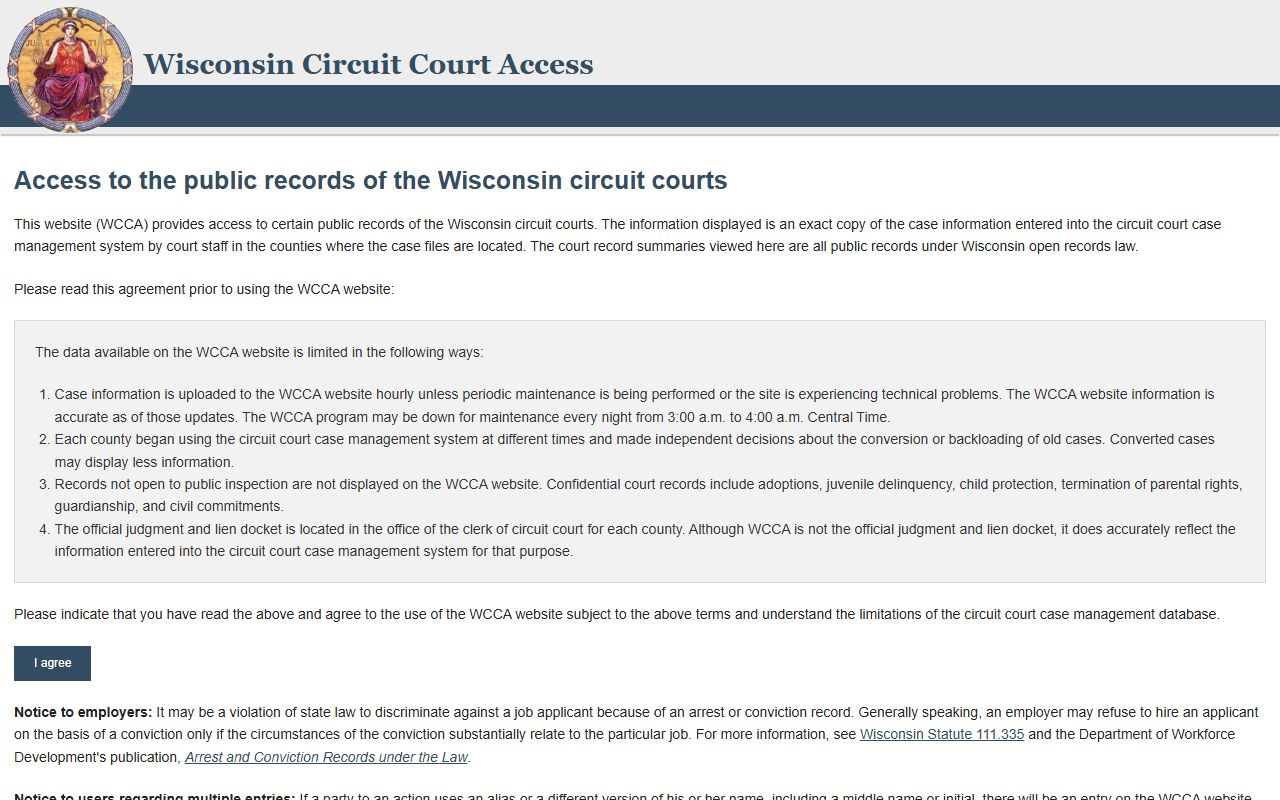
WCCA is where many Wisconsin warrant searches begin, but in Milwaukee you still need to verify whether the county clerk, municipal court, or sheriff has the most complete version of the record.
Getting Copies of Warrant Records in Milwaukee
If you need copies instead of a basic lookup, the best office depends on what kind of Warrant Records you are after. Police reports and accident records go to MPD open records. Municipal court docket copies and warrant-lifting questions go to Milwaukee Municipal Court. Certified court copies and older case files usually run through the Milwaukee County clerk. Choosing the right office matters because each one copies a different part of the record trail.
For police records, the MPD fee schedule and counter hours are the most useful guide. For court copies, Milwaukee County's clerk fee structure is the key one, especially if you need certified records for another agency. For incarceration or bond questions, the inmate locator and sheriff's office can tell you whether the warrant has already turned into custody information. That separation makes Milwaukee a good example of why Warrant Records searches work best when you know whether the record is police, municipal, or county in nature.
If your search needs additional legal context, the Wisconsin Courts forms page at wicourts.gov/forms1/circuit.htm can help you find circuit court paperwork, and the Wisconsin statutes at Chapter 968 and Chapter 969 show how warrants, appearances, and release conditions fit together. Those state references do not replace the local offices, but they explain why a Milwaukee case may require a court appearance, a payment, or a separate record request before the file is fully resolved.