
Access Sheboygan Warrant Records
Sheboygan Warrant Records are easiest to search when you separate the city police side, the municipal court side, and the county enforcement and court offices. The city police can point you toward warrant status and records requests, while the municipal court often explains why a warrant exists or what has to happen next. County offices then fill in the broader warrant picture if the case has moved beyond the city level. That layered approach matters in Sheboygan because the same name can appear in more than one record set. Once you know which office created the record, the search becomes much more direct.
Where to Start for Sheboygan Warrant Records
The city website at sheboyganwi.gov is the best first stop for Sheboygan Warrant Records because it connects the police department, the municipal court, and general city records. The research notes that the police department has a most wanted list and that records requests go through the Records Division. That makes the city side the best place to begin if you already know the name and want to see whether the city has a current warrant or record request path.
The municipal court page is just as important. It handles the city court side of the search and gives you the payment and plea information that often decides whether a warrant stays active. If a citation or missed court date started the issue, the municipal court is usually the fastest place to confirm the next step.
Sheboygan also has county support through the sheriff and clerk of courts, which gives you a practical second path when the city side is not enough. That mix of city and county offices is useful because some warrant questions are really about enforcement, while others are really about the court file that sits behind the warrant.
Sheboygan Police Warrant Records and Requests
The Sheboygan Police Department is the city office most closely tied to Sheboygan Warrant Records when you want status checks, records requests, or the most wanted list. The department is at 1315 N. 23rd Street, Sheboygan, WI 53081, and the research says it publishes a most wanted list online. That is helpful because a warrant search often starts with a name and a question about whether the city still lists the person as wanted.
The police records description in the research is detailed. It includes name, aliases, date of birth, physical description, address, identifying marks, fingerprints, photographs, arrest details, arresting officer information, charges, bond, court jurisdiction, and case number. That is a strong reminder that a warrant record can be more than a simple yes or no. It can also be the paper trail that explains how the case moved through the city system.
If you need warrant status, the department asks you to call and verify the record before you act on it. That step matters because a wanted list can change faster than a printed copy. The city police page at sheboyganwi.gov/172/Police is the city-side starting point for that search.
Sheboygan Municipal Court Warrant Records
Sheboygan Municipal Court is the key city office for many Sheboygan Warrant Records questions. The court is at 1315 N. 23rd Street, Suite 102, Sheboygan, WI 53081, and the research gives both the court page and the payment information page. That is useful because city warrants are often tied to a missed appearance or a payment issue, and the court page explains the steps that can resolve the problem.
The Sheboygan Municipal Court page at sheboyganwi.gov/172/Municipal-Court is the exact source shown in this image and the best city-side place for warrant and payment questions.
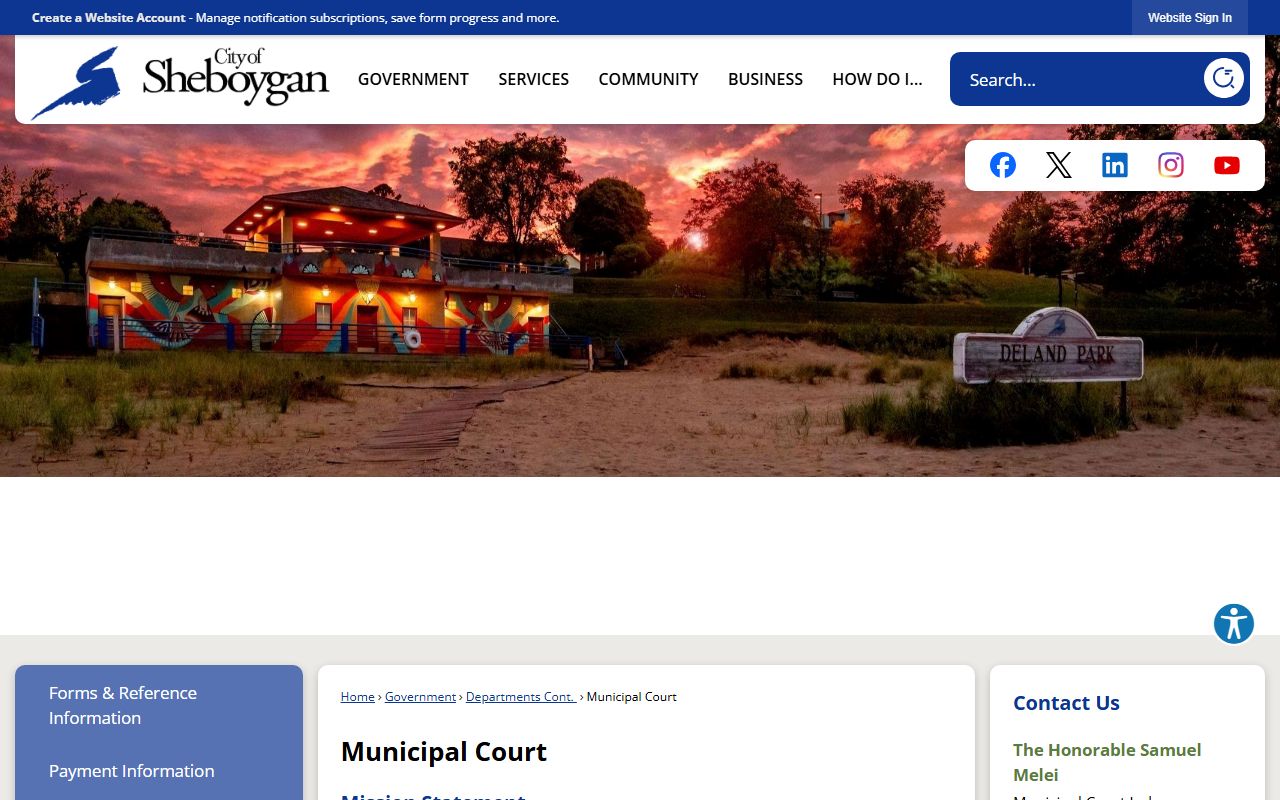
Use it when the warrant is tied to a city citation, a missed court date, or a payment problem.
The court hours are short and specific. Office hours run Monday, Tuesday, Thursday, and Friday from 9:00 AM to 4:30 PM, with Wednesday afternoon hours only. Payment can be made in person, online, by mail, by fax, or through the drop box, and the court also describes partial payments, restitution rules, and payment plans. That makes the court page the place where a warrant search turns into an action plan.
The court can issue arrest warrants for nonpayment of forfeitures or failure to appear, and the research also says a poverty hearing can be requested before the due date. Those details matter because the right next step may be a hearing or a payment change rather than a new search.
Sheboygan County Warrant Records for Sheboygan
When Sheboygan Warrant Records move beyond the city court, Sheboygan County becomes the next place to check. The county sheriff handles warrant types that include arrest warrants, bench warrants, search warrants, civil warrants, material witness warrants, and probation or parole violation warrants. That wide set of warrant types matters because not every warrant is a city citation issue. Some are broader county enforcement matters, and some involve supervision or civil obligations.
The Sheboygan County Sheriff's Office at sheboygancounty.com/departments/sheriff is the county enforcement source for Sheboygan Warrant Records. The county clerk of courts at 615 North 6th Street is the next stop when you need court record searches, warrant verification, or public access terminals. The courthouse at the same address gives the county search a clear physical point of contact.
The county sheriff's warrant issuance process also gives useful context. The research says a sworn affidavit is submitted, a judge reviews it, the legal standard is checked, and then the judge signs and dates the warrant. That process explains why a county warrant search is not just about names. It is also about the step the court has already taken.
Note: In Sheboygan County, the sheriff and the clerk often answer different parts of the same issue, so checking both saves time when the city file is not enough.
Getting Copies of Sheboygan Warrant Records
Getting copies of Sheboygan Warrant Records usually means deciding whether the file lives with the police, the municipal court, the city clerk, or the county clerk of courts. The city clerk handles general city records requests, the police department handles records requests tied to police work, and the municipal court handles the city court side of the file. That split keeps you from sending a request to the wrong office.
The municipal court payment information page at sheboyganwi.gov/departments/municipal-court/payment-information/ is useful if the record search is really about resolving a payment issue that created the warrant. It does not replace a copy request, but it often tells you what must happen before a warrant can be cleared.
If the issue moved into county court, the county clerk of courts is the office to use for record searches and public access terminals. If the issue stayed with the city, the municipal court and police records office remain the best local contacts. Sheboygan works best when you treat each office as part of a different stage of the same case.
Wisconsin Rules That Shape Warrant Records
Sheboygan Warrant Records sit inside Wisconsin's statewide warrant and public-records rules. Wis. Stat. Chapter 968 covers criminal procedure and warrant law, while Wis. Stat. Chapter 19 covers public access to many government records. Those chapters explain why a warrant may be public but still require the right office or a formal request.
The Wisconsin courts site at wicourts.gov and the statewide WCCA portal at wcca.wicourts.gov are the state tools that help you place the case before you contact the local office. They are useful when you need to see whether a matter sits in city court or has moved to the county level. The distinction matters in Sheboygan because both offices can be relevant.
The State Law Library arrest and search pages at wilawlibrary.gov/topics/justice/crimlaw/arrest.php and wilawlibrary.gov/topics/justice/crimlaw/search.php are a good plain-language guide if you want to understand the legal background before contacting the city or county office. They are background tools, not record substitutes, but they can make the search feel more direct.
Note: Sheboygan searches are simplest when you confirm the city court first, then use the county offices only if the case has already moved there.