
Search Calumet County Warrant Records
Calumet County Warrant Records make the most sense when you treat Chilton as the center of the record trail. The county seat brings the sheriff, the clerk of circuit court, and the public court index into the same search path, but each office still answers a different question. The sheriff can tell you whether a warrant is active or being served. The clerk can tell you what the court filed. WCCA shows the public view that ties the case together. If you begin with the right name or case number, the county search becomes a short path instead of a long one.
Calumet County Sheriff's Office and Warrant Records
The Calumet County Sheriff's Office is the first stop when a warrant may still be active. A sheriff-side check answers the live question that the court index cannot always answer on its own. It tells you whether the county is treating the matter as a field issue, whether the person has already been taken into custody, or whether the public result is only a slice of a longer case history. That matters because Warrant Records and docket entries do not always update at the same pace. In a county with both rural and city traffic, the record can be simple while the path to it is not.
The statewide portal at Wisconsin Circuit Court Access is the cleanest public check for Calumet County Warrant Records. WCCA shows the county, case number, party name, and docket details that help you sort an active warrant from an older note or a related filing. It also gives you a way to compare the court view with the sheriff's view before you ask for copies or make a follow-up call. The Calumet County WCCA portal at wcca.wicourts.gov is shown below.
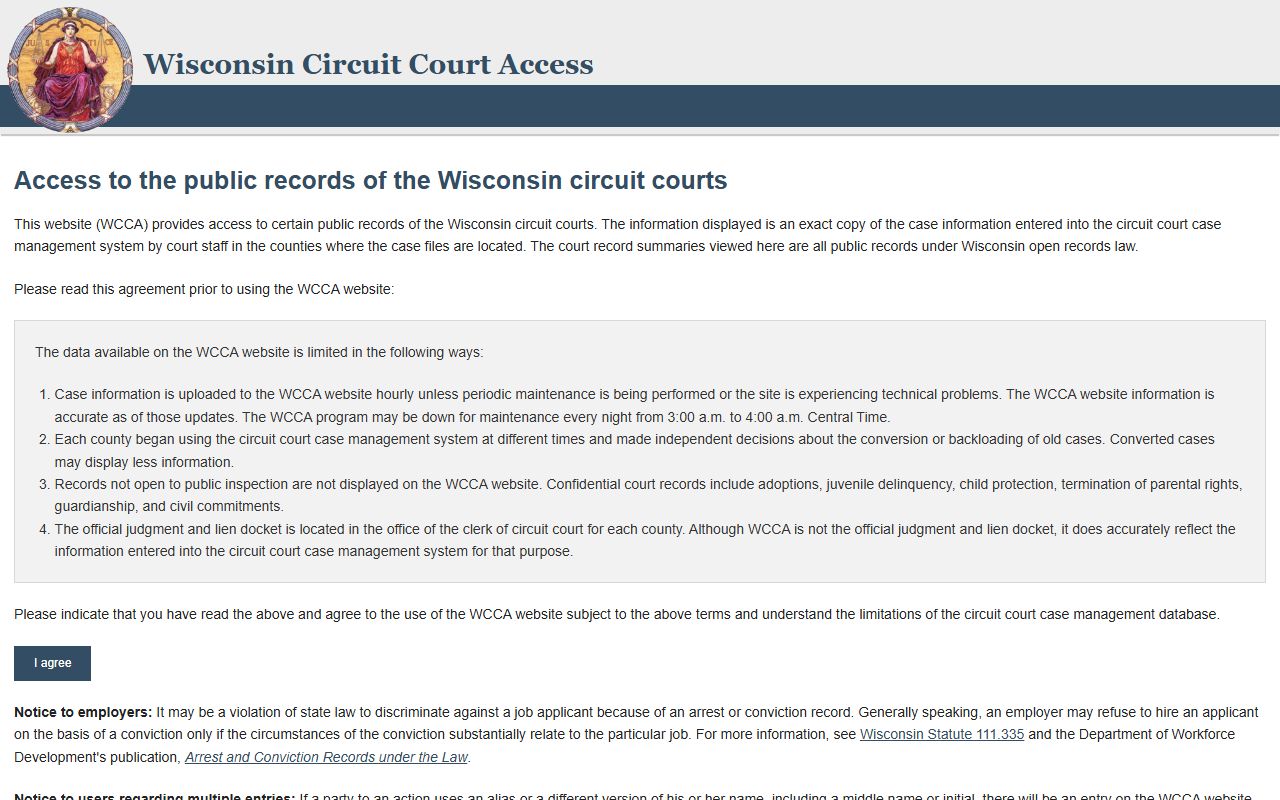
The image is the public case-search view you would use first. It helps most when a surname is common, when a case has more than one hearing, or when you need to confirm that the court record matches the person you were given. Calumet County Warrant Records are easiest when the public index and the local office tell the same story.
Search Calumet County Warrant Records
A Calumet County Warrant Records search should begin with the public court index and then move to the office that can confirm the current status. WCCA is the right first step because it shows case-level information and links the public docket to the county record. Once you have that, the sheriff can tell you whether the matter is still active in the field and the clerk can tell you what is on file. That sequence keeps the search grounded in the actual record instead of a guess.
For Calumet County Warrant Records, the strongest search details are the full name, case number, date of birth, and hearing date. If you do not have the case number, use the name first and then compare the result with the hearing date or branch number. A narrow search is better than a broad one because a common name can produce more than one result. That is especially true in a county where criminal, traffic, family, and civil records all pass through the same courthouse and the same public index.
Calumet County Clerk of Circuit Court
The Calumet County Clerk of Circuit Court is the office that gives Warrant Records their court-side shape. The clerk keeps the docket, the filing history, and the papers behind the public summary. If you need copies, a certified document, or confirmation of what the court actually entered, the clerk is usually the right office. That matters most when a warrant is tied to a missed hearing, a filing issue, or a case that moved through more than one step before the public note was created. The clerk is where the record becomes the file.
Calumet County searches are strongest when the clerk and sheriff are read together. The sheriff can tell you whether enforcement is current. The clerk can tell you what the court recorded, what branch handled the matter, and whether there is a file that does not show fully in the index. For that reason, Warrant Records in Calumet County are less about one quick answer and more about matching the court file to the public status. If you need the next office in the chain, the county directory at the Wisconsin State Law Library county page for Calumet County is a useful guide.
Calumet County Law Library Help
The Calumet County law library directory at wilawlibrary.gov/topics/county.php?c=Calumet is the county-specific reference shown in the image below. It helps when Calumet County Warrant Records turn into a filing question or a court-process question instead of a simple status check. That is useful in Chilton because the county seat is small enough that the legal path is often simpler than the public record makes it look, but only if you know which office to ask next. The directory gives you that map without forcing you to guess.
The law library page is also a good bridge when the search raises a family, support, or criminal process question. It can point you toward the office that is most likely to control the next step instead of leaving you with a loose public entry. The Calumet County directory image is below.
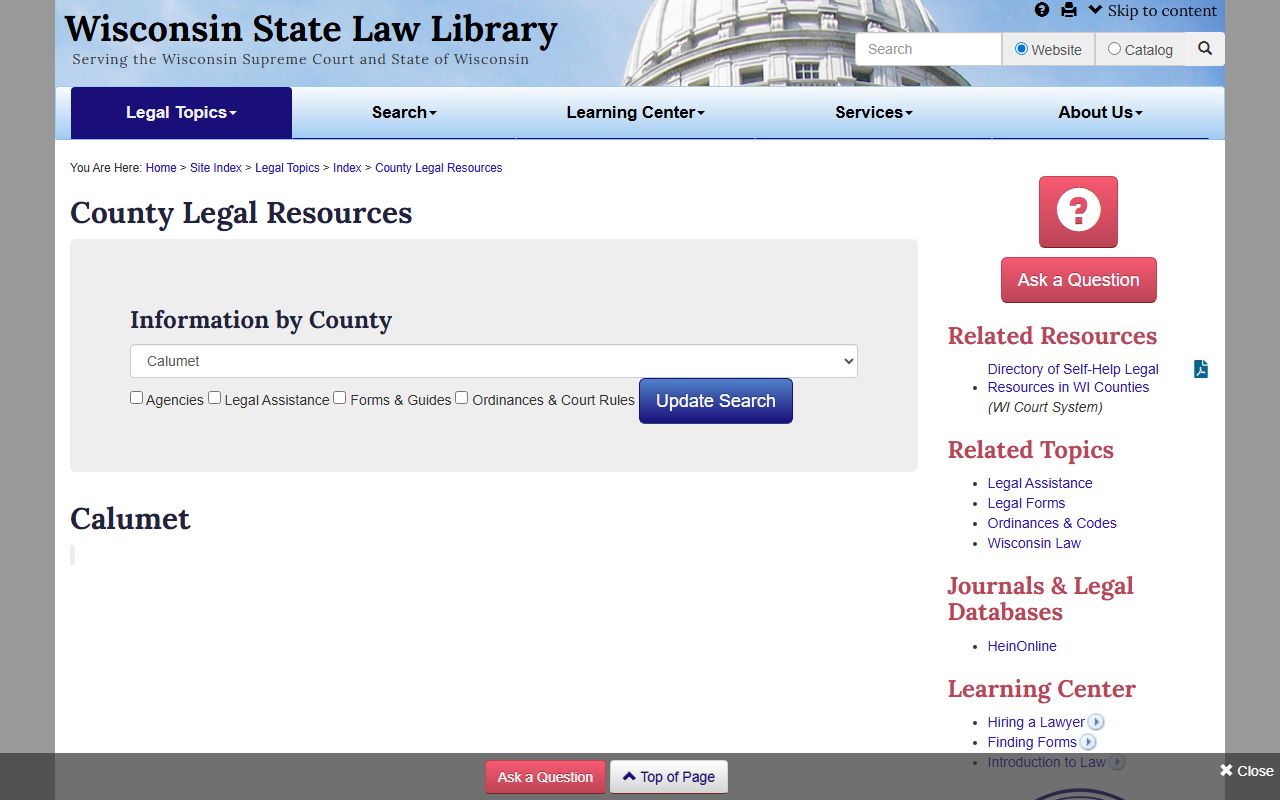
Use the county directory as the map and the court index as the record. When those two line up, the search gets much easier. If they do not line up, the difference usually points to a sealed case, an older file, or a matter that belongs in a different office. Calumet County Warrant Records become easier to read when you pair the directory with the clerk and the sheriff instead of treating the public index as the whole answer.
Wisconsin Warrant Records Resources
State resources fill the gaps that county Warrant Records cannot always show on the first screen. Start with Wisconsin Circuit Court Access for the public case view, then use wicourts.gov for forms, court contacts, and the circuit court eFiling page at the Wisconsin circuit court eFiling portal. The Wisconsin State Law Library also keeps plain-language guides at Arrest and Bail Resources and Search and Seizure Resources.
Wisconsin Statute Chapter 19 governs public records access, while Chapters 968 and 969 cover criminal procedure and release conditions. Those statutes explain why Calumet County may show a warrant in one office, a docket in another, and a copied file in a third. If the record seems split, that is usually because the county offices are doing different jobs, not because the record is missing. The county result becomes much easier to read once you know which office controls which piece.