
Find Iowa County Warrant Records
Iowa County Warrant Records usually make the most sense when you start in Dodgeville, check the statewide court index, and then move back to the county office that can confirm the live status. The county is small enough that a name search can get you close quickly, but the file still splits between the sheriff, the clerk of courts, and the public court view. That is why a good search is a step-by-step process. Start with the cleanest name or case number you have, then use the local office that can tell you whether the record is active, closed, or tied to another county matter.
Iowa County Warrant Records
The Iowa County Sheriff's Department is the first local stop when Warrant Records need a current check. The research lists phone number (608) 935-3314, county law enforcement services, county jail operations, and execution of criminal warrants. It also notes service of restraining orders, evictions, repossessions, and foreclosure sales, which matters because not every county warrant question starts as a pure criminal case. The office also provides Vinelink inmate lookup, a Huber packet, an open records request form, and civil process services. That gives you both the enforcement side and a records path.
The sheriff is the right office when you need to know whether the warrant is still being served in the field. A public docket can show that a case exists, but the sheriff can tell you whether the matter is moving through active enforcement, jail processing, or another county function. In a county like Iowa, that distinction saves time. It keeps a search from drifting into the wrong office when the record is really a live service question or a custody question tied to a criminal file.
The Iowa County WCCA page at wcca.wicourts.gov is shown below as the public county index.
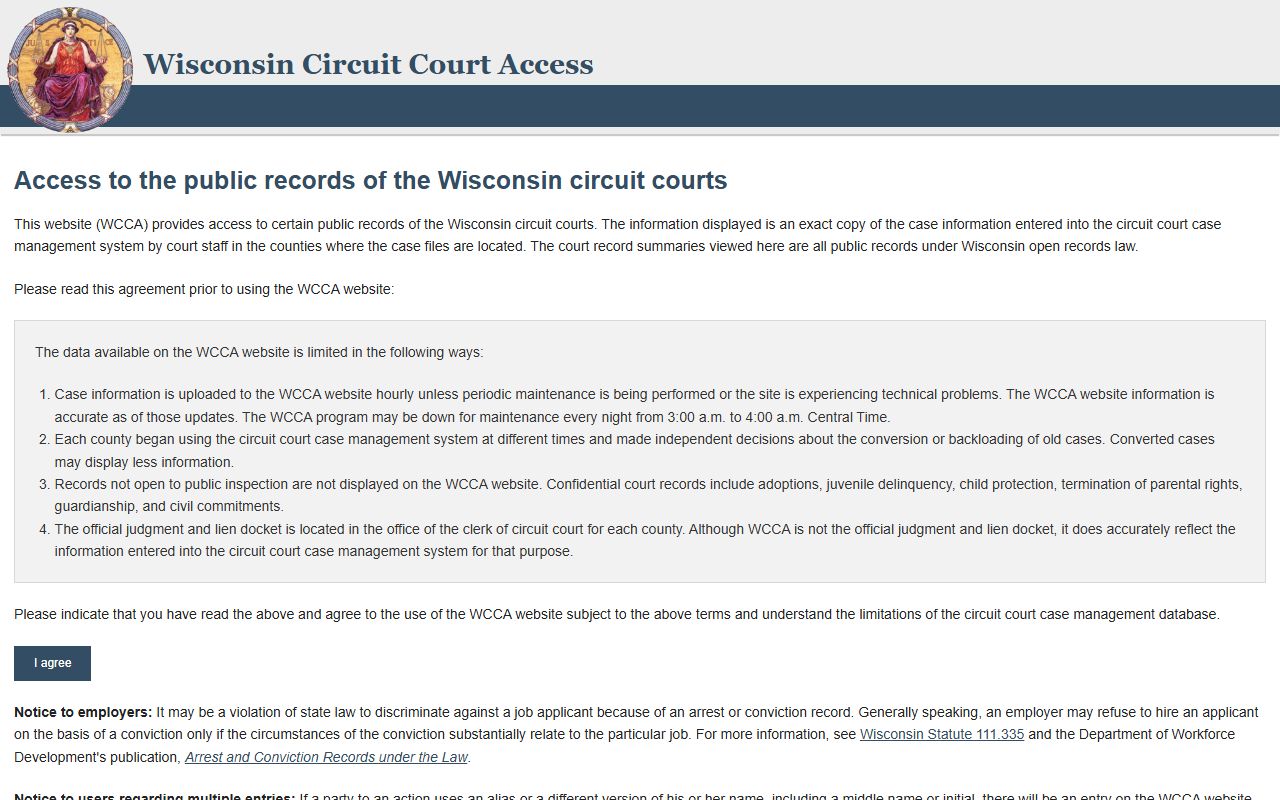
That screen is the best quick read before you call the sheriff. It can help you separate a fresh warrant from an older docket note and point you toward the right case file.
Search Iowa Warrant Records
A good Iowa County Warrant Records search starts with the most exact detail you have. If you know the full legal name, begin there. If you have a case number or citation number, use that first. The county research says WCCA can search Iowa County cases by name and case number, and it also shows criminal case information, warrant status, court dates, dispositions, and historical records. That is useful because a single name can point to a few records, but the case number usually leads you to the right file much faster.
If the name is common, add the filing year or compare the case type. A traffic matter, family case, or criminal complaint may all appear in the same public index, but they do not mean the same thing. WCCA is the public front end, not the whole file. Once you see the result, compare the docket line with what the sheriff says and with what the clerk has on file. That cross-check is important when the record involves a recalled warrant, a bench warrant, or an older order that still shows in the search screen.
When you want the fastest county answer, use the public index first and then follow up with the office that owns the next step. For Iowa County, that usually means the sheriff for live enforcement questions and the clerk for the file itself. If the result is still hard to read, the county directory can show you which office controls the next move, which is often more useful than repeating the same search in a slightly different way.
Iowa County Warrant Clerk
The Iowa County Clerk of Courts is the office that keeps the court side of Warrant Records in Dodgeville. The research lists phone number (608) 935-0395 and says the clerk handles court records for civil, criminal, family, traffic, and ordinance cases. It also notes the civil judgment and lien docket, online fee payment, jury information, court forms, payment-plan information, records management, and public access to non-juvenile records. That makes the clerk the place to go when a WCCA result needs a copy, a printout, or a fuller explanation.
The clerk is especially useful when a warrant is tied to a hearing date or a case that moved through more than one court step. WCCA may show the status, but the clerk holds the paper trail behind it. If you need to see what was filed, what was entered, or what copy exists for your request, the clerk is the right source. That is true whether the record is a criminal warrant, a family matter that later became a court issue, or another filing that left a public docket note.
Because Iowa County is not a large court system, the clerk can often help you narrow the search faster than a broad online pass. The office in Dodgeville is where the county keeps the written record that supports the public index. If you want the exact document behind the docket line, the clerk is the place that can usually explain how to get it.
Iowa Warrant Records Library
The Iowa County directory at the Wisconsin State Law Library county page for Iowa County is the best local map when Warrant Records turn into a contact question. It pulls the county's legal offices into one place, which helps when the search is not just about one warrant but about the office that caused the case to move in the first place.
The Iowa County directory at wilawlibrary.gov/topics/county.php?c=Iowa is shown below as the county legal-contact page.
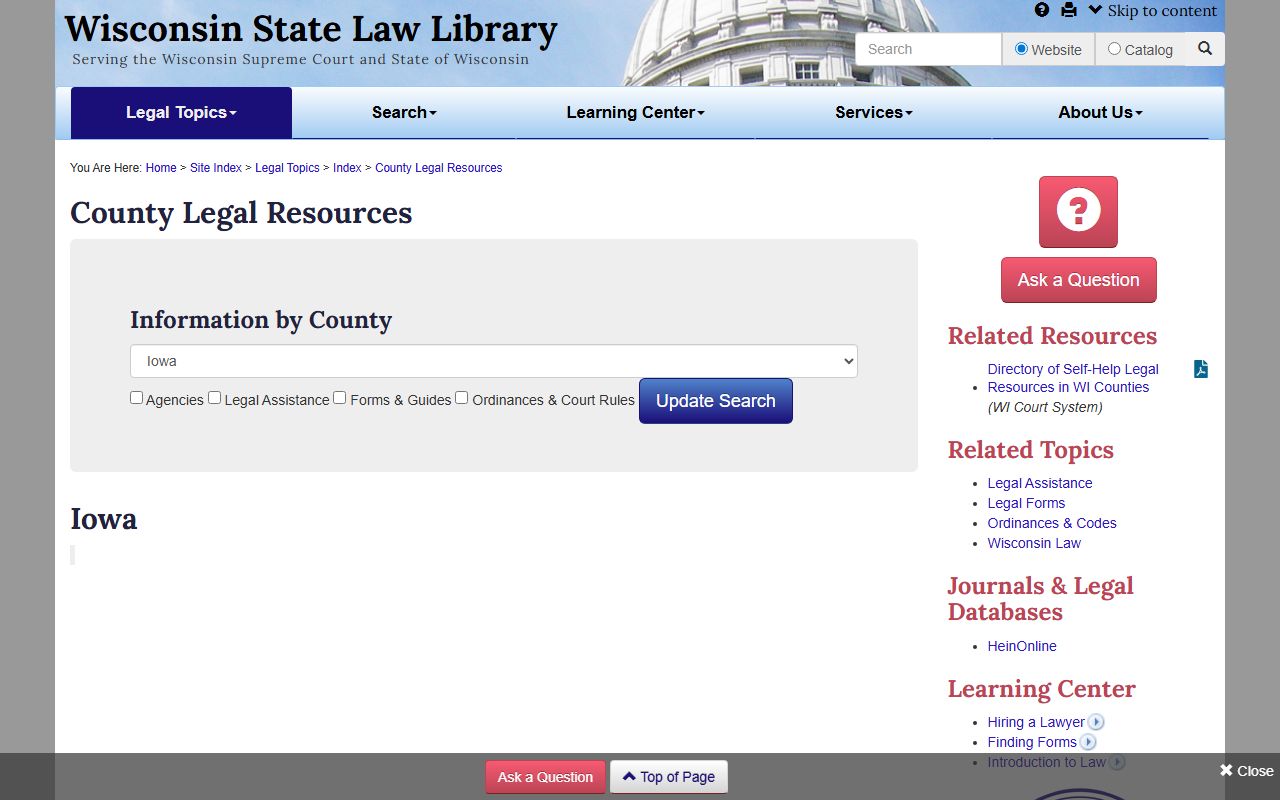
The directory points to the Child Support Agency, Corporation Counsel, County Clerk, District Attorney, Family Court Commissioner, Register in Probate, Register of Deeds, Sheriff's Department, and Iowa County Victim/Witness Assistance. It also lists forms for criminal court information, victim services, mediation, probate, guardianships, zoning, traffic citation information, and vital records. That helps when a warrant record is tied to support enforcement, a missed appearance, or a family case rather than a straightforward arrest file.
The county resource page is also useful because it brings the court rules and ordinances into the same search path. If the warrant came out of a more complicated county issue, the law library page gives you the office list that can explain where the file sits now and which department should answer first.
Wisconsin Warrant Records Resources
When Iowa County Warrant Records need a wider view, the statewide tools are the next step. The public index at Wisconsin Circuit Court Access is the starting point, but the broader court system at wicourts.gov gives you forms, court contacts, and a place to move from a quick search to a fuller filing check. The circuit court eFiling portal at the Wisconsin circuit court eFiling page can also help when you need the court route rather than just the public index.
The Wisconsin State Law Library also keeps plain-language guides at Arrest and Bail Resources and Search and Seizure Resources. Those pages are helpful when the county search result is brief or when you need to understand why one record is public and another is not. They do not replace the county file, but they do explain the record path that leads to it.
For most Iowa County searches, the order is simple. Check WCCA, confirm with the sheriff if status matters, and then use the clerk or the law library if you need the document trail or the legal context. That keeps the search local, focused, and tied to the county office that can actually answer the next question.