
Search Lafayette County Warrant Records
Lafayette County Warrant Records are easiest to read when you start with the statewide court index and then move to the county office that can confirm what is current. That approach helps because a docket entry, a sheriff check, and a paper file do not always update at the same speed. In Lafayette County, a clean search usually begins with a name or case number, then narrows to the office that can explain the result. If the record is active, served, recalled, or still being processed, the right office will show that next step.
Lafayette County Warrant Records and WCCA
WCCA is the first place most people should check for Lafayette County Warrant Records. The statewide portal lets you search by party name, case number, citation number, or birth date, and it can show the case type, docket activity, and other public court details that help you sort out a warrant lead. That is useful in Lafayette County because the public index can tell you whether you are looking at a criminal case, a traffic matter, or a different court event before you call an office or ask for a copy.
The Lafayette County WCCA portal at wcca.wicourts.gov is the first source shown in the image below.
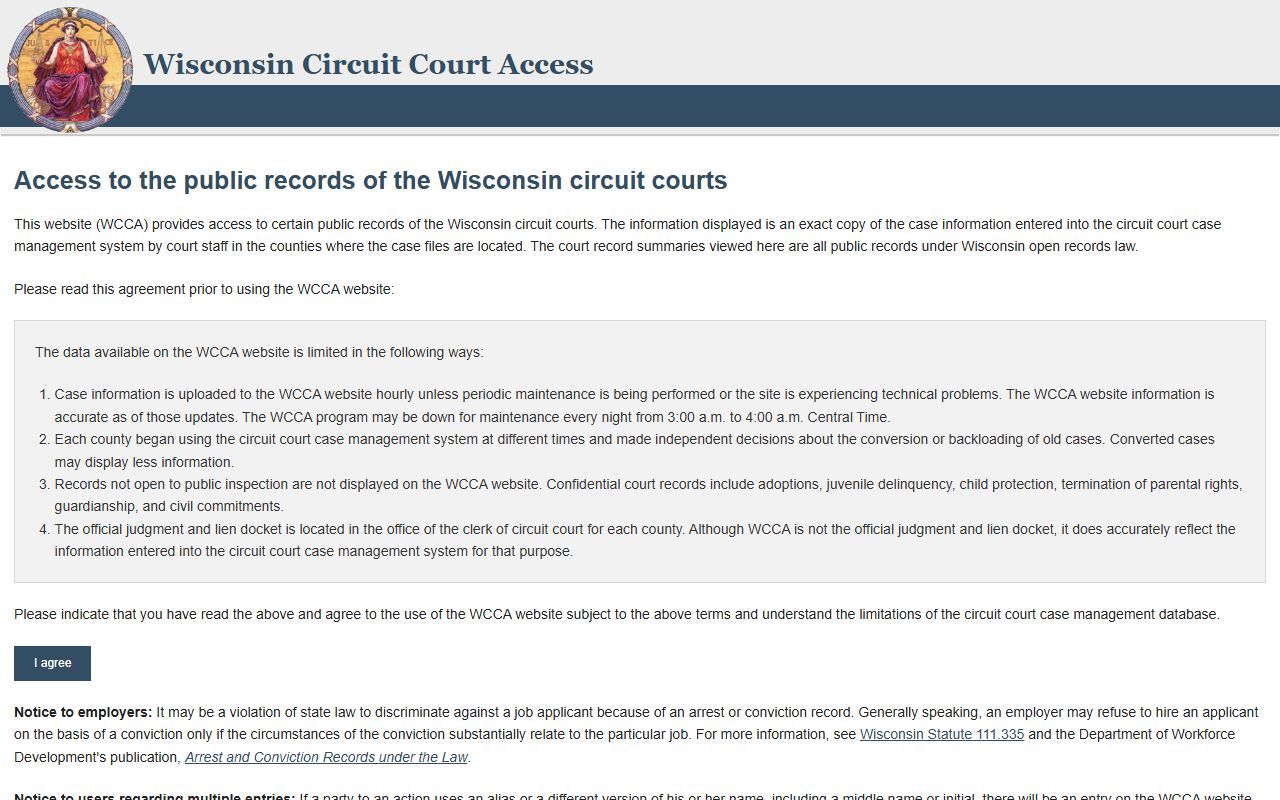
The image is a reminder that WCCA is a starting point, not the whole file. It can point you toward a warrant status flag, but the public index does not replace the sheriff or the clerk when you need current enforcement detail or a certified copy. For Lafayette County Warrant Records, the best reading habit is to use WCCA for the lead and the county office for confirmation.
That order also keeps you from mixing old docket notes with live action. A warrant can move from active to served, recalled, or quashed, and the court record may show that change before a caller hears it from the field. When the search matters, read the docket first and then verify the present status with the county office that handles the record.
Sheriff Checks in Lafayette County
The sheriff is the office most people contact when they need to know whether Lafayette County Warrant Records are active right now. That distinction matters. The court file tells you how the case moved through the system, while the sheriff can usually confirm whether a warrant is still being served, whether it has been entered into the field, or whether it has already been resolved. If you only need a yes-or-no answer on current status, the sheriff is usually the fastest follow-up after WCCA.
In practice, a sheriff check is best when you already have a name, a birth date, or a case number. If the spelling is uncertain, the public index may still help you narrow the search before you call. If the issue is a bench warrant, an arrest warrant, or a warrant tied to a missed hearing, the sheriff can often tell you whether the record is still active enough to matter. That is especially helpful when the person you are searching for has used more than one name or has more than one case file.
Lafayette County Warrant Records can also involve requests that go beyond a simple status check. If you need to know which office holds the best copy, ask whether the sheriff is only confirming current enforcement or whether you should also contact the clerk for the court record. That saves time and keeps the search clean. It also matches the way Wisconsin records are organized, with the court maintaining the file and the sheriff handling the enforcement side.
Lafayette County Warrant Records in Court Files
The clerk of circuit court is the records custodian for Lafayette County Warrant Records when you need the court file itself. WCCA can show you the outline, but the clerk can usually tell you how to inspect the paper record, request a copy, or locate the docket history that sits behind the online entry. That is the office to use when you need a certified copy, a filing trail, or a better read on how the warrant was issued in the first place.
For court-file work, Wisconsin public records law matters. Wis. Stat. Chapter 19 sets the public-records framework, while the courts use that framework to decide what can be inspected, copied, or withheld. The Wisconsin court system portal at wicourts.gov is also useful because it points you toward forms, eFiling, and the broader court structure that supports the county file. If a warrant came out of a larger criminal or family case, the court record often shows the next step better than a short online summary.
When you ask for Lafayette County Warrant Records from the clerk, focus on the case number, the filing date, and the document type if you know it. Those details help the office pull the right file quickly. If you do not know them, the clerk can still help you narrow the search by party name or other case information. The best result is a record that tells the full story, not just the line that shows a warrant existed.
Lafayette County Law Library Directory
The Lafayette County law library page at the Wisconsin State Law Library county directory is the next source shown below. It is useful when Lafayette County Warrant Records point toward more than one office and you need a plain map of the county contacts.
The Lafayette County directory at wilawlibrary.gov/topics/county.php?c=Lafayette is the legal contact page shown in the image below.
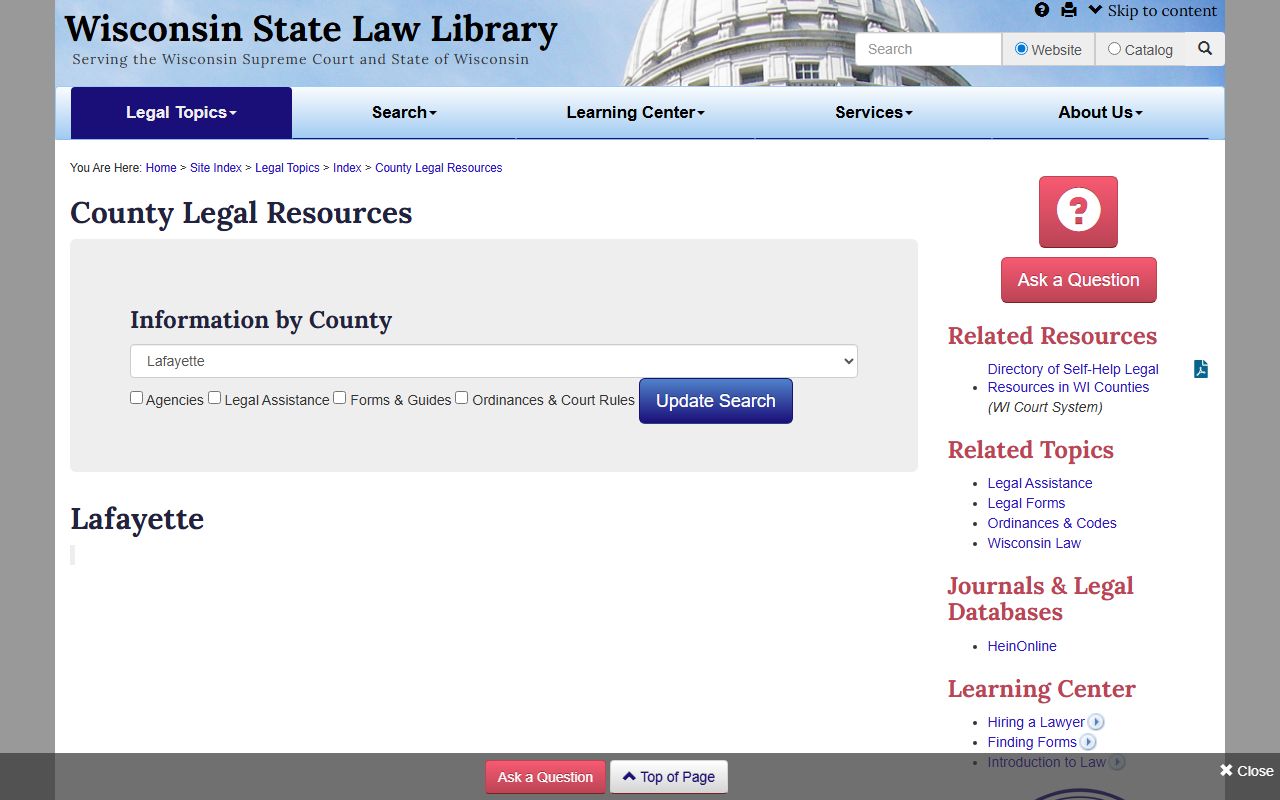
The county directory can help you move from a warrant search to the office that best fits the problem. In many Wisconsin counties, that means the child support agency, district attorney, family court commissioner, register in probate, register of deeds, or county clerk. A warrant lead can be tied to a missed hearing, a support matter, or a criminal file, so the directory helps you avoid guessing which office has the next useful answer.
For the wider Wisconsin context, the State Law Library has a useful Arrest and Bail Resources page and a Search and Seizure Resources page. Those pages help explain why a warrant may appear in one place, why a clerk may hold the paper file, and why a sheriff may still be the office that knows the current status. If you need a practical search order in Lafayette County, begin with WCCA, confirm with the sheriff, and then use the clerk or law library directory when the record needs context.