
Find Richland County Warrant Records
Richland County Warrant Records are best handled as a simple public-record search first and a county-office check second. That matters because the public court entry may show only part of the picture. A docket line can tell you that a warrant exists, but it may not tell you whether the matter is active, recalled, or tied to a later hearing. If you begin with the statewide index and then move to the county office that can confirm the record, you save time and avoid reading too much into a single search result. The process is plain once you know the order.
Richland County Warrant Records at WCCA
Wisconsin Circuit Court Access is the first place to check Richland County Warrant Records. The manifest shows a Richland County WCCA image, which is a good reminder that the statewide index is the public front door for county court records. It lets you search by name or case number, and it gives you the docket trail that helps you tell a current warrant from an old filing note. For most people, that is enough to identify the correct file before they reach out to a county office.
The Richland County WCCA portal at wcca.wicourts.gov is the source shown in the next image and the first public screen for a county warrant search.
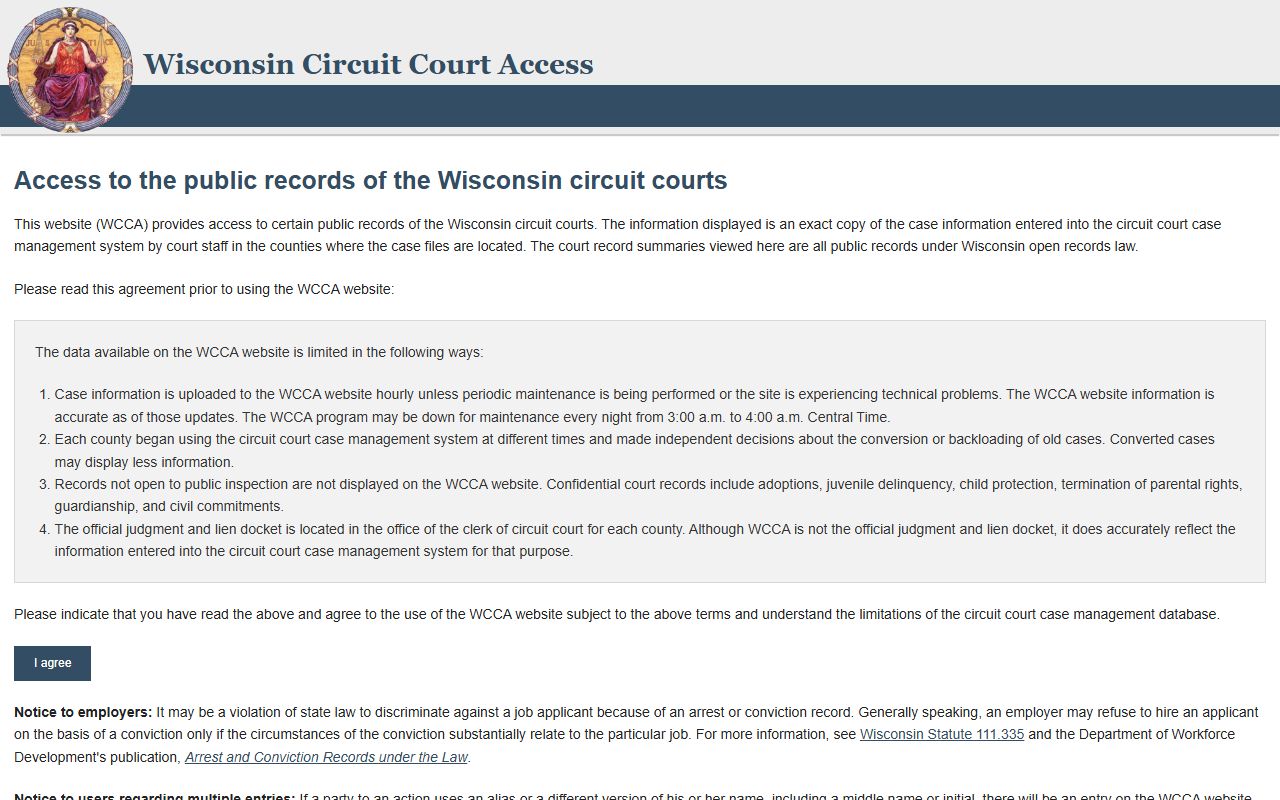
That public view is especially useful when you have only a name or a rough year. It can show the party names, the case number, and enough docket history to help you decide whether the case belongs with the sheriff, the clerk of circuit court, or another county office. The portal does not replace those offices, but it helps you ask the right next question.
Richland County is no different from the rest of Wisconsin in this respect. Some records are delayed, some are limited, and some entries may not show the full context. That is why WCCA is the start, not the end, of the search.
How to Search Richland County Warrant Records
A clean Richland County Warrant Records search starts with the exact name if you know it. If you have a case number, use it. If you only know the approximate filing date, narrow the search by the likely court type. That keeps the public index manageable and lowers the chance of a false match. A good search path is one that can be repeated by another person and still land on the same record.
For Richland County, the search path usually looks like this:
- Start with WCCA and search by exact name or case number
- Use the county sheriff if you need a live enforcement answer
- Use the clerk of circuit court if you need copies or docket history
- Check the Wisconsin State Law Library county directory for local contacts
That order is useful because warrant records are often split across more than one office. The court file explains the case history. The sheriff handles active status. The law library helps you figure out which county office should own the next step. Richland County Warrant Records make the most sense when you read those parts together instead of treating one search screen as the full story.
The same rule applies when the warrant grew out of a missed appearance, a criminal case, or a family-related court step. A docket line alone can be too thin to answer the real question. The search is strongest when it moves from public index to local office with a clear record type in mind.
Richland County Warrant Records and County Offices
Richland County Warrant Records usually lead to two county offices: the sheriff and the clerk of circuit court. The sheriff is the place to ask about live status. The clerk is the place to ask for the paper file, docket printout, or copy that explains the record behind the online note. Even when the research set is thin, that county division still holds true. It is the standard Wisconsin pattern, and it keeps the search anchored to the office that actually controls the next step.
If you are trying to understand whether a warrant is still active, the sheriff can help with current enforcement. If you need to know what was filed, what was ordered, or what the court entered later, the clerk is the better stop. Those are different questions. They need different offices. That is why Richland County Warrant Records are easier to handle when you split the search into status, file, and copy.
The public-record side of the search also connects to Wisconsin law. Chapter 19 explains public access, Chapter 968 covers criminal procedure and warrant issuance, Chapter 969 covers bail and release conditions, and Chapter 946 can matter when the issue touches government-related offenses or bail jumping. You do not need to memorize the chapters to search the record, but they explain why the county file is public and why some parts of it may still be limited.
Richland County Warrant Records and the Law Library
The Wisconsin State Law Library county directory for Richland County at wilawlibrary.gov/topics/county.php?c=Richland is the source shown in the next image and the best local guide when the record search needs a county contact map.
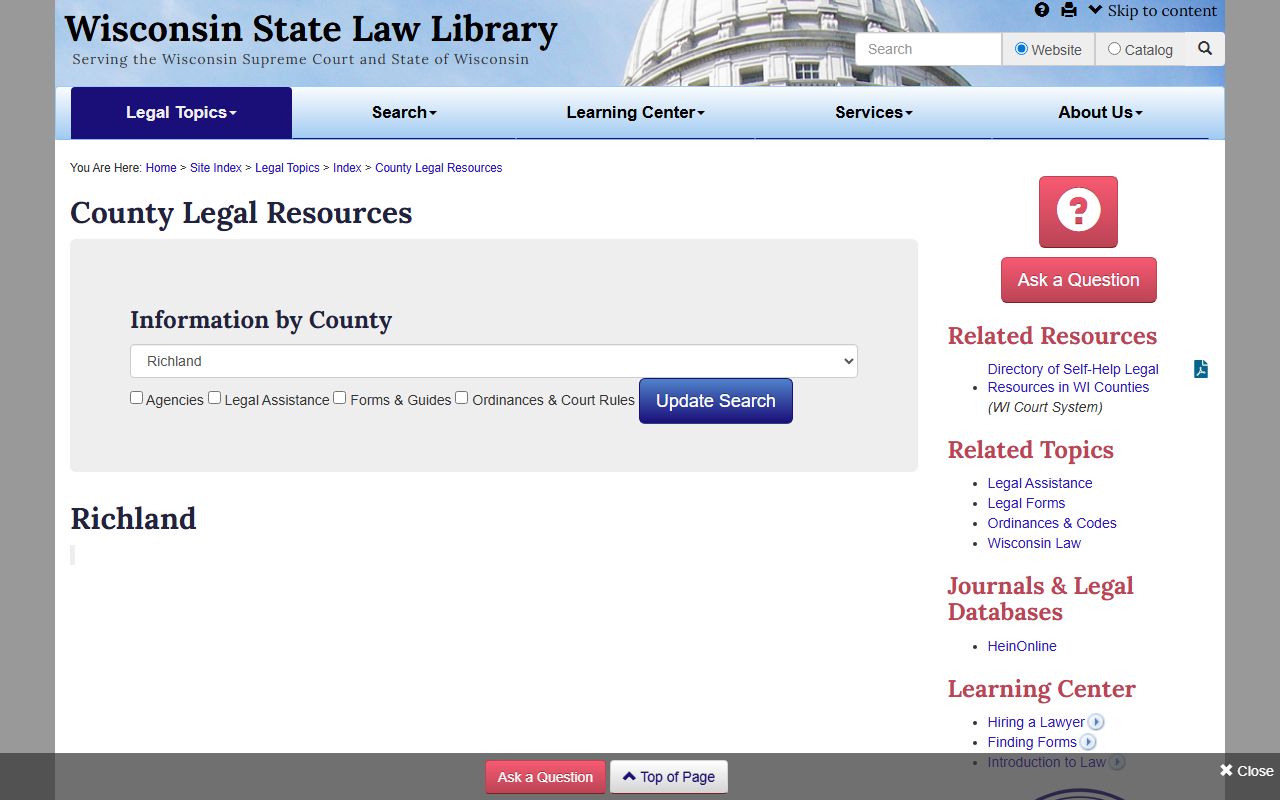
That directory helps because it points you toward the county offices that often sit around a warrant issue, even when the research notes are not heavy on direct office detail. It is a useful bridge between the search result and the office that can explain the next step. If the warrant came from a missed hearing, a support matter, or another county filing, the law library page gives you a practical way to move from a public line in WCCA to the office that owns the file.
The directory is also useful for forms and legal research. A Warrant Records question is often less about the name in the docket and more about what the next filing should be. When that happens, the law library page is a better guide than a generic search engine result because it stays inside Wisconsin court resources and county contacts.
Wisconsin Warrant Records Resources for Richland County
Use statewide tools when the county record needs more context. WCCA gives you the court index, wicourts.gov gives you forms and eFiling, and the Wisconsin State Law Library gives you plain-language help through Arrest & Bail Resources and Search and Seizure Resources.
Those resources are important because a Richland County docket entry may not tell you everything at once. A record can show a filing date, a warrant note, or a status indicator without explaining the full enforcement picture. The state resources help you read the record without overreaching. They also connect to the statutes that sit behind the public file, including Chapter 19 for access, Chapter 968 for warrant procedure, Chapter 969 for bail, and Chapter 946 for related offenses.
For Richland County Warrant Records, the most practical sequence is still simple: check WCCA, confirm with the sheriff when status matters, use the clerk for copies or case history, and use the law library if you need the legal path that ties the county record together. That keeps the search local and keeps it grounded in the actual Wisconsin record system.