
Sauk County Warrant Records
Sauk County Warrant Records usually make more sense once you treat the public index and the local office records as two parts of the same search. WCCA gives you the first look, but the sheriff and clerk are what tell you whether the record is current, resolved, or tied to a larger case file. In Sauk County, that matters because a name can return more than one result, and one result may be a live warrant while another is only a docket entry. A careful search starts broad enough to find the case and narrow enough to keep the wrong person out of the file.
Sauk County Warrant Records at the Sheriff
The sheriff's office is the place to ask when Sauk County Warrant Records need a current status check. The court record can show that a warrant was issued, but the sheriff is the office that knows whether service is still pending, whether the person has already been contacted, or whether the live enforcement question has moved on. That difference matters. A docket entry can stay on the record long after the practical warrant issue has changed. The sheriff gives you the field view, which is the part most people want first.
The public Wisconsin Circuit Court Access index is still the best place to begin. WCCA can be searched by name, case number, citation number, or date of birth, and it shows the county, filing date, case type, and status. For Sauk County Warrant Records, that helps you tell a current warrant from a case that only looks active because the docket has multiple events. It also helps you spot cases that belong in a different court path before you spend time on the wrong office.
The Sauk County WCCA page at wcca.wicourts.gov is the public case view shown below.
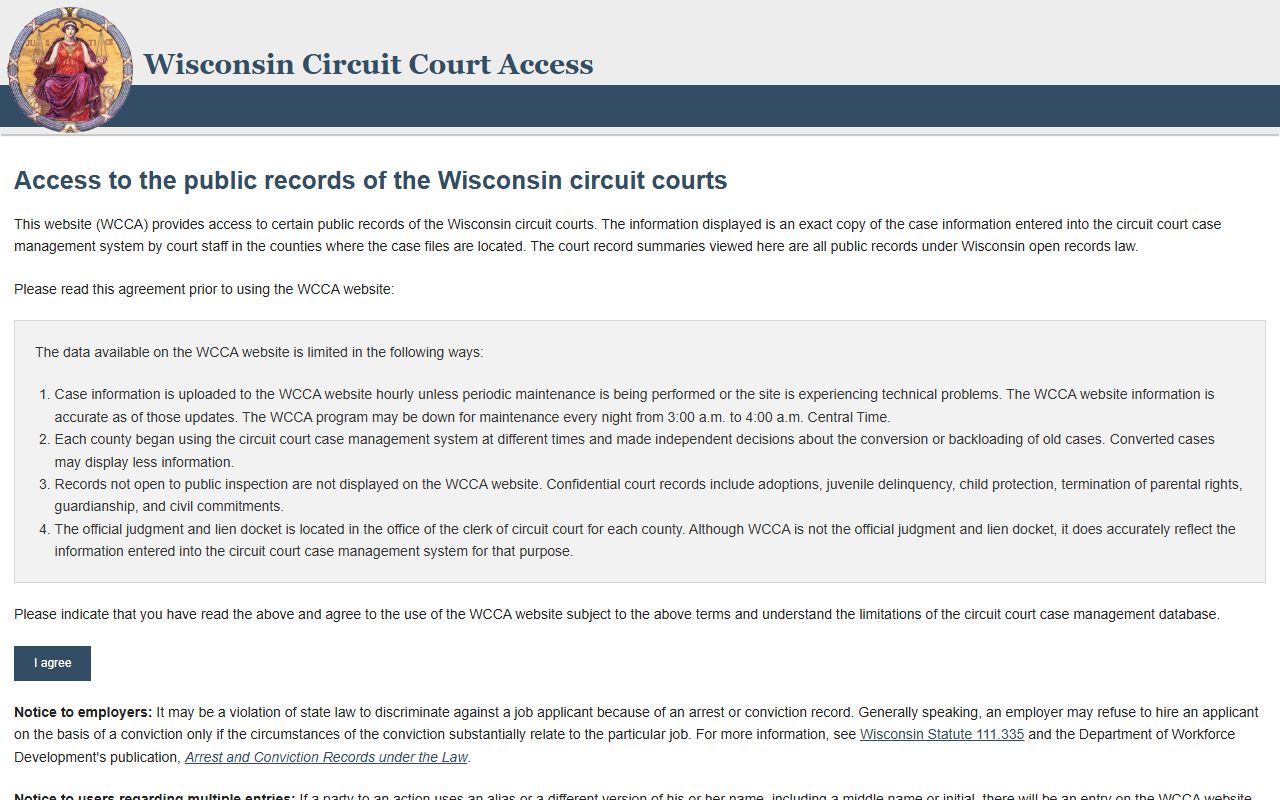
That screen is the fast way to narrow a search before you move to a local office. It is also the easiest way to compare a court result with what the sheriff may confirm by phone.
Note: A WCCA result can show the case path without showing every detail, so use it as a starting point, not the final answer.
How to Search Sauk County Warrant Records
A Sauk County Warrant Records search gets cleaner when you keep the first pass focused on the best identifier you have. If you know the full name, use it exactly. If the name is common, add the date of birth or the case number. If the matter is older, include the filing year. That approach matters in Sauk County because public court search results can contain a lot of similar names, and one extra field often prevents a false match.
Use these details to keep the search on track:
- Exact full legal name
- Date of birth when available
- Case number or citation number
- Approximate filing year
- Any alias or former name
Once you have a match, look at the docket carefully. WCCA can show civil, criminal, family, traffic, and small claims cases, so not every result with the right name is a warrant case. In a warrant search, the important question is whether the entry points to an arrest warrant, a bench warrant, a search warrant, or only a hearing note. That distinction is what tells you whether to contact the clerk, the sheriff, or both.
If the online record looks thin, move to the county office that can read the file behind it. The clerk keeps the court side of the record, while the sheriff handles enforcement and live status questions. Sauk County Warrant Records are easier to handle when you treat those roles as separate but connected parts of the same process.
Sauk County Clerk and Warrant Records
The clerk of circuit court is the paper trail side of Sauk County Warrant Records. If you need the case file, a docket printout, or a copy of the record, the clerk is the office that controls that material. The clerk can help you separate a warrant entry from the rest of the case history, which is important when a file has more than one hearing or more than one kind of court action. A public index is helpful, but the clerk is what makes the result usable.
That role matters even more when the warrant is tied to a traffic case, a criminal case, or a family matter. Those records can look similar in the public search, but the next step is not always the same. A court file may need a copy request, a docket review, or a look at the original order. The clerk is the office that can sort those paths without turning the search into guesswork.
The legal frame stays the same across Wisconsin, even though each county handles the work in its own way. Chapter 19 explains public records access, Chapter 968 explains how criminal proceedings and warrants begin, and Chapter 969 explains release and bail conditions. For Sauk County Warrant Records, those rules show why the public result and the file behind it may not line up perfectly on the first screen.
Sauk County Law Library Help for Warrant Records
The Sauk County law library directory is a useful next step when a Warrant Records search needs county contacts, forms, or legal help in one place. The directory at wilawlibrary.gov/topics/county.php?c=Sauk brings the county's agencies together instead of forcing you to chase separate pages. That is especially helpful when the record raises a family, support, or procedure question rather than a simple yes-or-no warrant check.
The Sauk County law library page at the Wisconsin State Law Library county directory for Sauk County is the legal-contact page shown below.
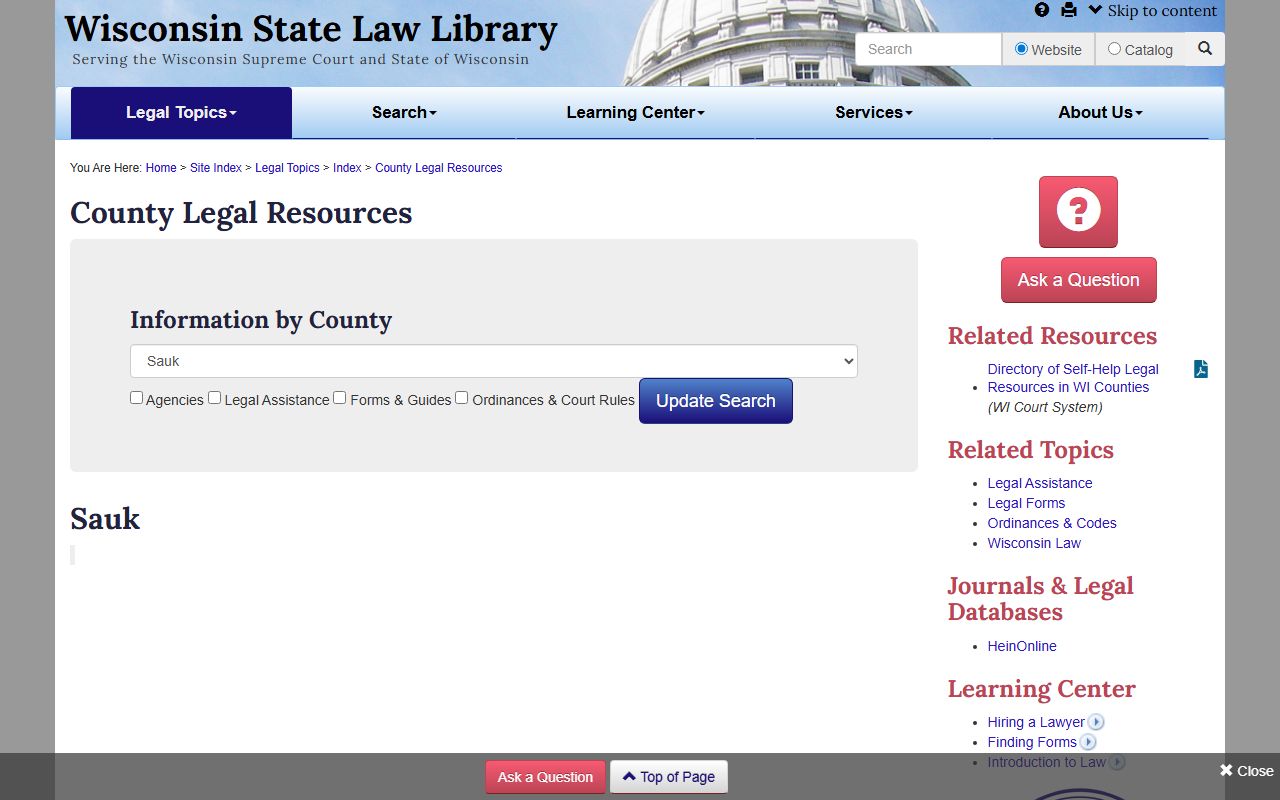
That directory is useful because it points to county contacts, legal assistance listings, and other resources that help explain the record. If the warrant question is tied to another case type, the directory gives you a better map than the public index alone.
Note: The law library is best used as a guide to the right office, not as a substitute for the court file or the sheriff's confirmation.
Wisconsin State Warrant Records Resources for Sauk County
State resources fill the gaps that a county search can leave behind. The Wisconsin Court System at wicourts.gov gives you forms, eFiling access, and the court structure behind the public index. WCCA is the state case database that most Sauk County Warrant Records searches start with, and it remains the cleanest way to compare a case result against the county office view.
The Wisconsin State Law Library adds two especially useful research pages: Arrest & Bail Resources and Search and Seizure Resources. Those pages help when you need to understand what kind of warrant you are looking at, how the court process begins, or why a case file may have more than one relevant record. They are a strong companion to the public search because they explain the legal path behind the docket.
Chapter 19, Chapter 968, and Chapter 969 are the core statewide rules that shape the record. Chapter 19 controls access to public records, Chapter 968 covers commencement of criminal proceedings and warrants, and Chapter 969 covers bail and conditions of release. For Sauk County Warrant Records, those rules are useful because they explain why some parts of the file are public, why some details are limited, and why a warrant entry may stay visible after the live question has changed.
Note: If the county index is crowded, use WCCA first, then the clerk, then the law library directory to keep the search precise.