
Search Sheboygan County Warrant Records
Sheboygan County Warrant Records are easiest to sort out when you treat the county as a system of related offices instead of one single file. A search may begin with the statewide court index, move to the county sheriff, and then shift to the clerk of circuit court if you need the paper trail behind the case. City matters can also matter here, especially when a Sheboygan municipal case affects payment status or court appearances. The best search keeps those pieces separate so you can tell what is public, what is current, and what still needs direct confirmation.
Sheboygan County Warrant Records Overview
Sheboygan County Warrant Records often start with the court side of the file and then move into enforcement. The county research shows the Sheboygan Police Department, the Sheboygan Municipal Court, the Sheboygan County Sheriff's Office, and the Sheboygan County Clerk of Courts all playing different roles. That means a name search by itself may not answer the full question. A municipal citation can lead to a payment issue, a failure to appear can turn into a bench warrant, and a county criminal case can move through the circuit court at the same time. The record trail is related, but each office sees a different piece of it.
For that reason, Sheboygan County Warrant Records are best handled in layers. The municipal court can help when the matter began as a city citation. The sheriff can help when the question is whether a warrant is still active or has already been served. The clerk of circuit court can help when you need the docket, a filing history, or a certified copy. WCCA fills the gap between those offices by giving you a public index that can be checked before you call or visit anyone in person. If the county record is thin, the state tools still give you a solid starting point.
Sheboygan County Sheriff and Status Checks
The Sheboygan County Sheriff's Office is the practical place to verify a live warrant status. The research notes the office at 525 N 6th Street in Sheboygan and identifies a range of warrant types the county may deal with, including arrest warrants, bench warrants, search warrants, civil warrants, material witness warrants, and probation or parole violation warrants. That mix matters because a public search can show the existence of a case, but only the enforcing office can say whether the warrant is still open, already served, or linked to a related court event. The sheriff is also the right place to ask when a case has moved from the file to the field.
Sheboygan County Warrant Records also connect to city-level enforcement in a way that many counties do not. The Sheboygan Police Department publishes a Most Wanted list online and accepts records requests through its Records Division, while the municipal court handles citation payments and appearance issues that can trigger a warrant. The research notes payment options, payment plans, and consequences for failure to pay, which is exactly the kind of detail that can explain why a case still shows unresolved. If you only look at the docket, you can miss that enforcement layer. If you only call the sheriff, you can miss the court action that created it. The county search works best when you check both.
Sheboygan County Clerk and Records Help
The Sheboygan County Clerk of Courts is the office that keeps the court side of Sheboygan County Warrant Records in order. The research places the clerk at 615 North 6th Street in Sheboygan and notes normal weekday hours. That office is where you go when you need a docket printout, a certified copy, or a better explanation of what the public index already shows. A warrant note in WCCA may be enough for a quick search, but the clerk can tell you what documents belong in the file and how to request them. That is useful when a warrant is tied to a criminal case, a family matter, or another proceeding that created multiple entries over time.
The county courthouse and clerk are especially helpful when the search needs a paper record rather than a status check. Sheboygan County Warrant Records can include new filings, old dispositions, and later entries that do not always read clearly in the statewide portal. If you need to know whether a matter was recalled, whether a payment plan changed the case, or whether a judgment has a related enforcement issue, the clerk is usually the best office to ask. The clerk is also the place to confirm whether the file you found in WCCA is the same file the county is still holding in the courthouse. That keeps a search from stopping at a surface result.
Sheboygan County Warrant Records Search in WCCA
The statewide WCCA portal is the clearest public index for Sheboygan County Warrant Records. The county research lists Wisconsin Circuit Court Access as the main online search tool, and that is usually where a name search begins. It lets you compare party names, case numbers, filing dates, and docket activity before you contact the sheriff or clerk. That is helpful in Sheboygan because city, county, and court information can all sit close together. The public portal does not replace a live confirmation, but it does help you see whether the record is open, old, or tied to a broader case history.
The WCCA image below comes from the exact source listed in the county manifest row for Sheboygan County. The statewide portal at wcca.wicourts.gov is the public court index shown in that image.
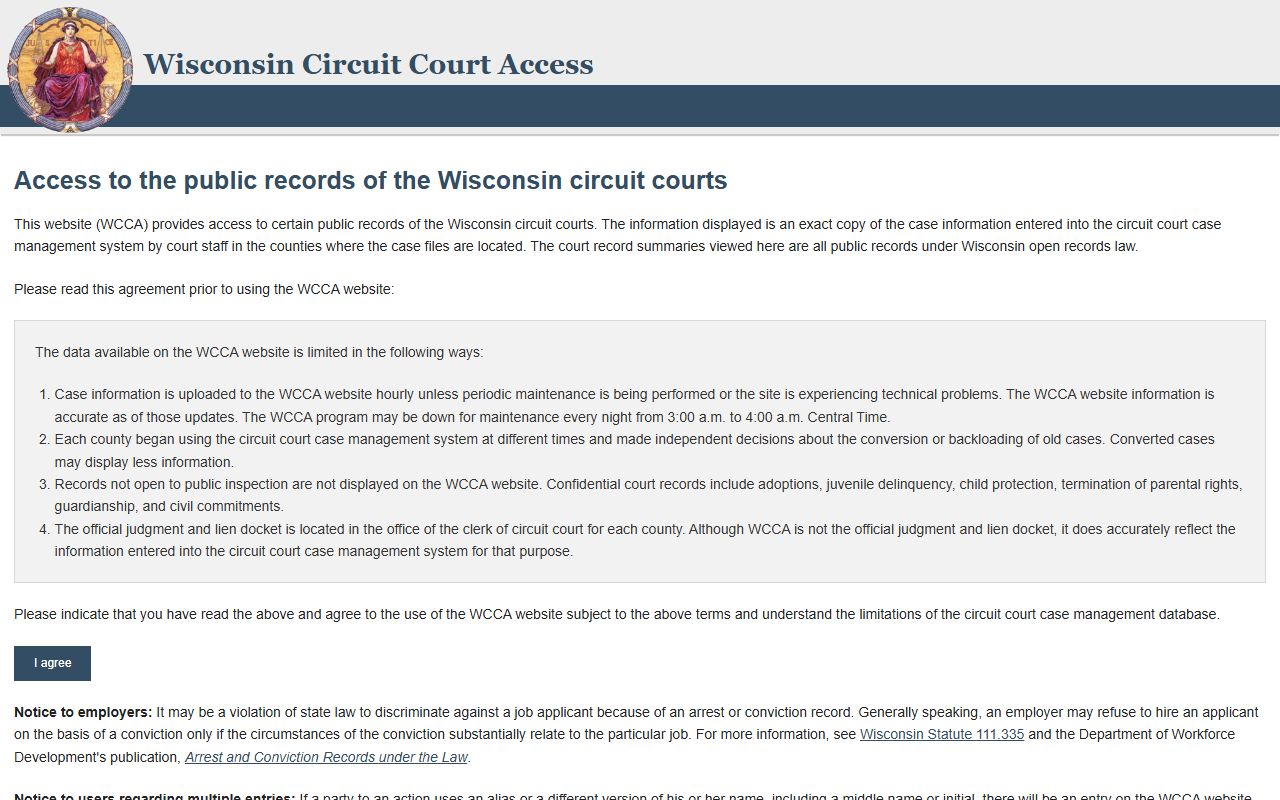
Use that portal as a first pass, then confirm anything important with the sheriff or clerk. A warrant can appear in the public index before every office has the same update, so a careful search looks for the county case, the docket note, and the current enforcement status together.
Sheboygan County Law Library and Records
The county law library directory is another useful path for Sheboygan County Warrant Records. The source URL in the manifest is wilawlibrary.gov/topics/county.php?c=Sheboygan, which places the county in the Wisconsin State Law Library directory. That directory is not a warrant list, but it helps you move from a search result to the legal contacts that matter when a warrant question is tied to court procedure, public records access, or a record that needs context. In a county search, that kind of guide can save time because it points you toward the office that actually controls the next step.
The law library image below comes from that Sheboygan County directory page. It is useful when you need a broader legal map for Sheboygan County Warrant Records.
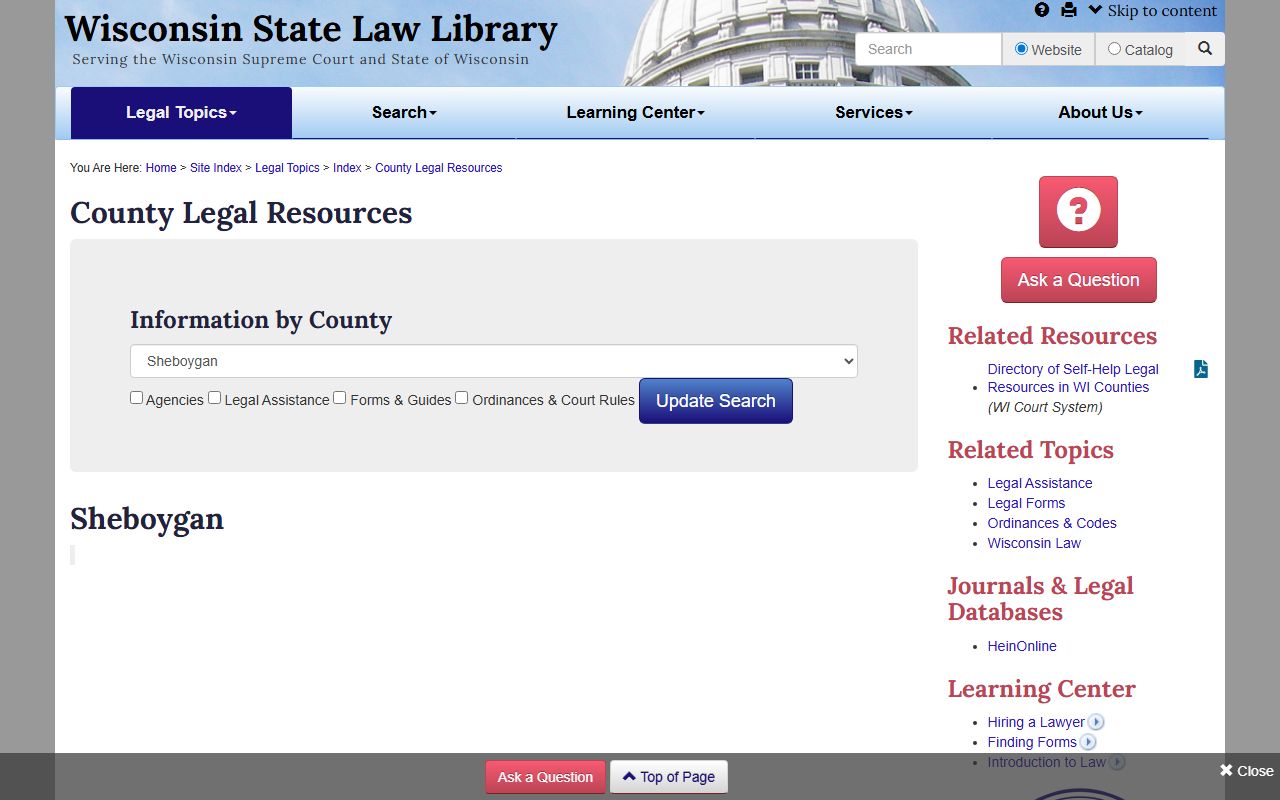
That directory matters when the question is not just whether a warrant exists, but how the case fits into Wisconsin procedure. It can help you move from a quick public search to the office that can explain the record, the form, or the court path behind it. In a county with both city and county layers, that guidance is often the difference between a stalled search and a useful one.
Wisconsin Warrant Records Resources
If Sheboygan County Warrant Records still need context, the statewide tools are the next stop. The Wisconsin courts site at wicourts.gov supports court information and forms, while the State Law Library keeps warrant research pages at Arrest Resources and Search and Seizure Resources. Those pages help explain how arrest and search issues fit into Wisconsin practice, which matters when the county record is only part of the story. If you need a broader agency view, the Wisconsin Law Enforcement Network at wilenet.widoj.gov and the Wisconsin Department of Justice at wisdoj.gov are also part of the statewide picture.
Public access is shaped by Wisconsin law too. Chapter 19 covers public records, Chapter 968 covers criminal procedure, and Chapter 969 covers bail and release. Those statutes matter because a Warrant Records search can turn into a question about access, service, or a later release condition rather than just a simple yes-or-no lookup. In Sheboygan County, that is especially true when a municipal court matter, a county case, and a sheriff entry all point to the same name but not the same stage of the process. Use the county office for current status, the clerk for the file, and the state tools for the law that sits behind both.