
Winnebago County Warrant Records
Winnebago County Warrant Records are easier to search than many counties because the research points to both county court resources and county office resources. Even so, the search still works best in layers. WCCA gives the broad statewide case view. Winnebago County Courts adds a stronger local court path. The sheriff helps with current enforcement questions. The clerk of courts helps with the file behind the public entry. That combination matters because a single record can appear in more than one official place while still serving different search needs.
Winnebago County Warrant Records Overview
Winnebago County Warrant Records connect county court information, sheriff information, and the broader Wisconsin court system. Research notes point to the Winnebago County Sheriff, the Winnebago County Clerk of Courts, the county Register of Deeds, and the county courthouse at 415 Jackson Street in Oshkosh. Those details matter because Winnebago County court functions also serve matters tied to Oshkosh and other local jurisdictions. A county search therefore works best when it stays clear about whether the question is a court-file issue, a local police issue, or a county-level warrant issue.
That layered structure also explains why a public search should not stop at the first match. A county court page may help show the local filing path. WCCA may help confirm the statewide case history. The sheriff may answer whether the warrant is still active. Each source helps, but none should be treated as the whole answer by itself. Winnebago County Warrant Records become much easier to use when the searcher treats the county resources as a connected system instead of separate fragments.
Winnebago County Sheriff and Warrant Records
The sheriff is the right office when Winnebago County Warrant Records need a current status answer. Research points to the Winnebago County Sheriff at the county sheriff site, which helps anchor the county enforcement side of the search. That matters because a court record may show the filing history while the sheriff can speak more directly to whether the warrant is still active, served, or otherwise changed by later events. A portal result alone rarely carries that full county context.
That sheriff role is especially helpful when a search begins with an Oshkosh-related matter and then needs to move outward to the county level. The county office helps tie the local event back to the county record system. Winnebago County Warrant Records therefore work best when the search stays aware of the difference between a court case trail and a present enforcement question.
Winnebago County Courts and Warrant Records
The county courts page is a strong local support tool for Winnebago County Warrant Records because it helps connect the public search to actual county court operations. The exact manifest source URL is winnebagocountycourts.org, which is the county courts source shown in the image below. Research also notes the courthouse location at 415 Jackson Street in Oshkosh, which helps anchor the county court side of the search in a real place.
The county courts image below comes from that exact Winnebago County courts source. It gives a stronger local court reference than many counties in this project.
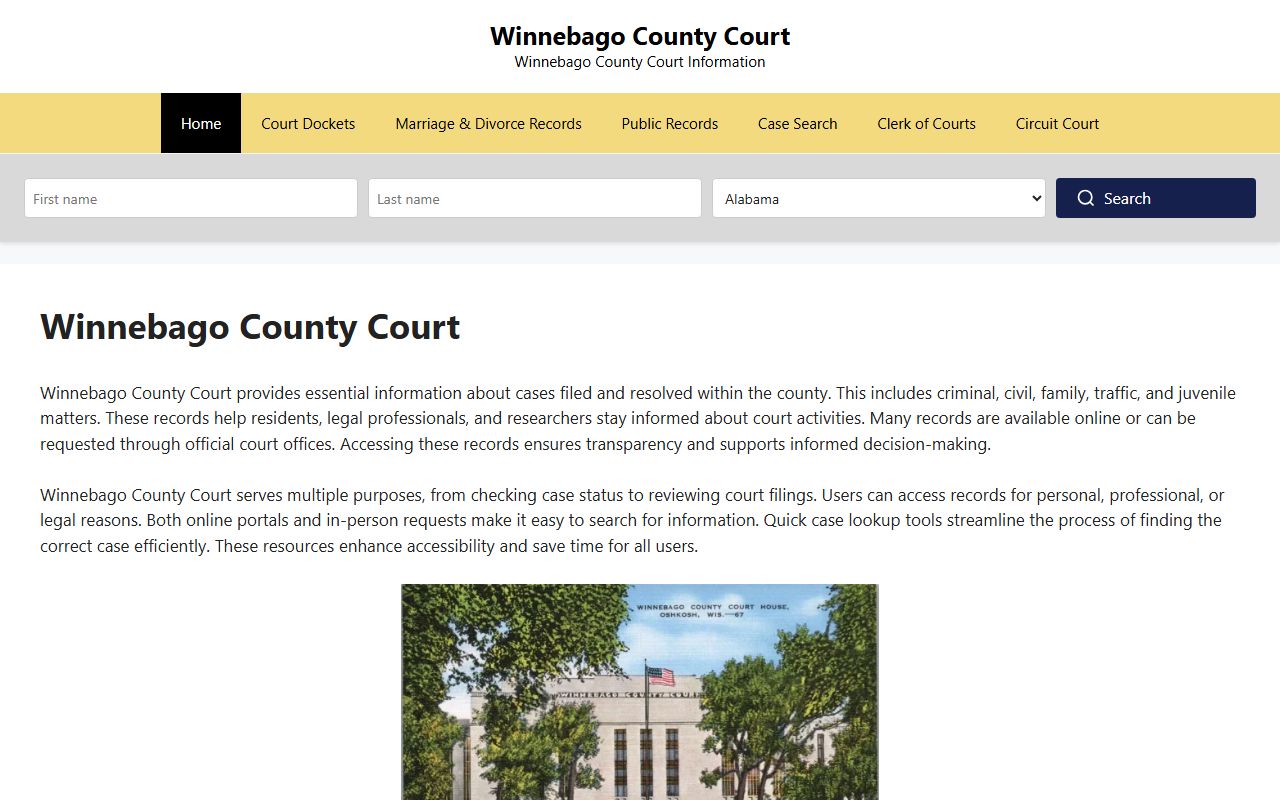
That court resource matters because it helps a searcher move from a public hit to the office structure that manages the case. It supports the court side of the search before the inquiry turns to the sheriff or a copy request.
Winnebago County Warrant Records in WCCA
WCCA remains the statewide starting point for Winnebago County Warrant Records. It gives the broad case index that lets you search by name or case number, identify the county, and compare the public docket before you call the sheriff or clerk. That first pass matters because it reduces guesswork and helps confirm whether the case you found actually belongs in Winnebago County. A search that begins with an exact case trail is easier to confirm and easier to follow through.
The WCCA image below comes from the exact manifest source URL listed for Winnebago County. The portal at wcca.wicourts.gov is the statewide court index shown in the image.
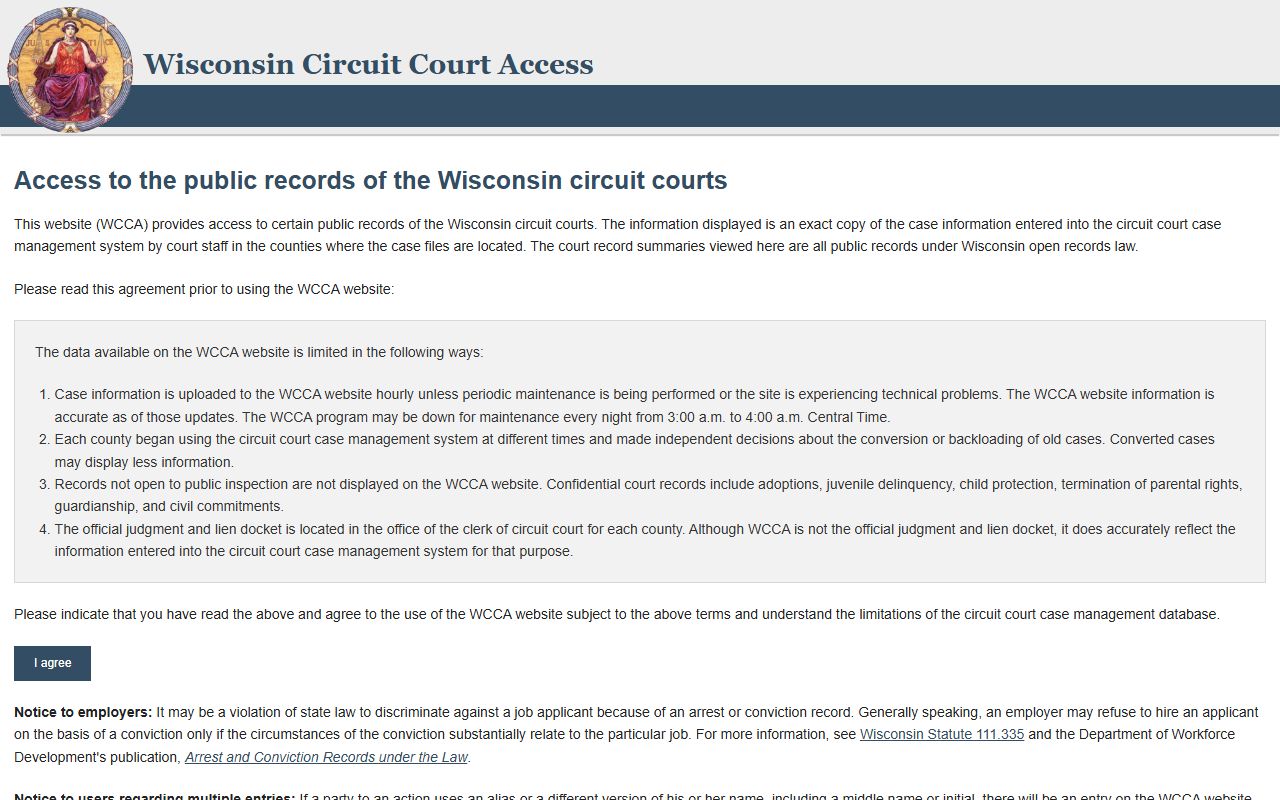
Use that statewide index as the first filter. After that, move to the county courts page, the sheriff, or the clerk depending on whether the question is procedural, current, or file-based.
Winnebago County Law Library and Warrant Records
The Wisconsin State Law Library county directory is another useful support page for Winnebago County Warrant Records. The exact manifest source URL is wilawlibrary.gov/topics/county.php?c=Winnebago, and it helps connect the county search to Wisconsin legal resources and county contacts. That directory is valuable because a warrant search often grows into a records-access or procedure question once the public hit appears.
The law library image below comes from that Winnebago County directory page. It helps add the legal-resource layer behind the county court and sheriff pages.
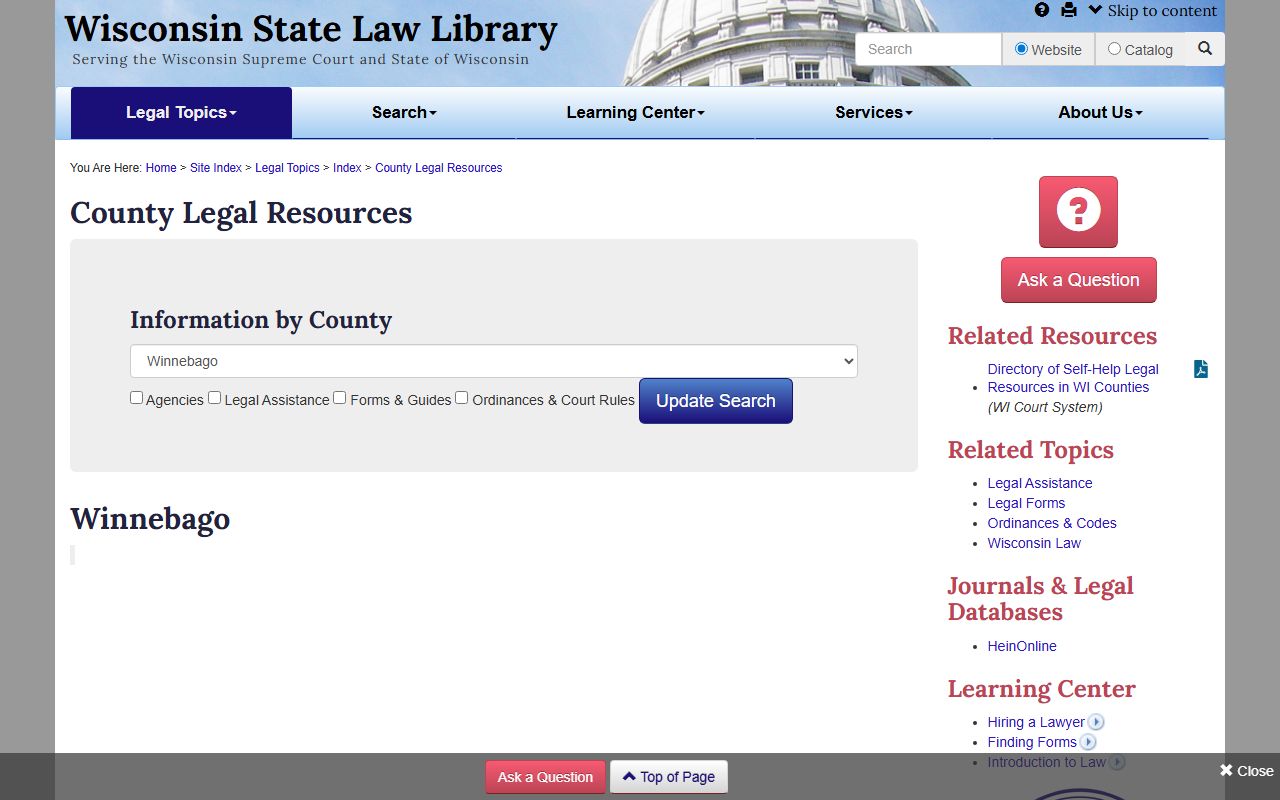
That page helps when the county search needs legal context instead of just a result. It keeps the search tied to official Wisconsin sources and helps the next step stay accurate.
Wisconsin Warrant Records Resources
When Winnebago County Warrant Records need broader context, the statewide Wisconsin resources still matter. The Wisconsin courts site at wicourts.gov helps with court information and forms, and the State Law Library keeps statewide research at Arrest Resources and Search and Seizure Resources. Those sources help explain how the county record fits inside the wider Wisconsin warrant and court framework.
Wisconsin public records law in Chapter 19, criminal procedure in Chapter 968, and release rules in Chapter 969 all shape what you can see in Winnebago County Warrant Records and when you can see it. The Wisconsin Department of Justice at wisdoj.gov and the Wisconsin Law Enforcement Network at wilenet.widoj.gov supply the statewide agency context. In practice, Winnebago County searches work best when the county resources answer the local question and the state resources explain the larger legal frame.